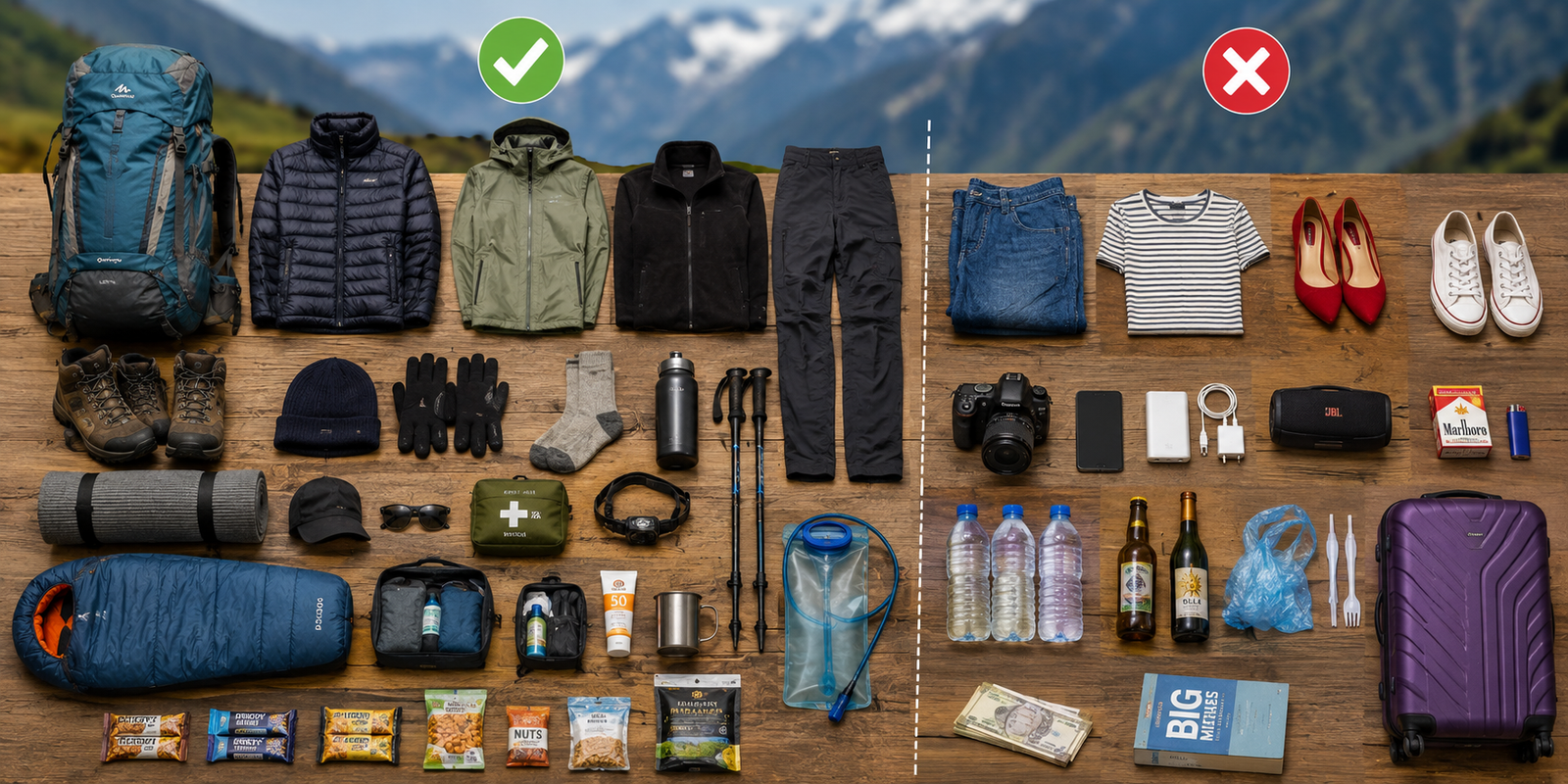
Madmaheshwar Trek Packing List: What to Carry & What to Avoid
A practical Madmaheshwar Trek packing list should keep you warm, dry, hydrated and mobile without making your backpack unnecessarily heavy. The trek starts from Ransi and climbs toward Madmaheshwar at about 3,289 metres, with roughly 16 km of trekking one way. Every item should solve a real need: weather protection, safe walking, hydration, warmth or basic health care.
This guide covers only what to carry for the Madmaheshwar Trek and what to leave behind. It is built for pilgrims and trekkers who want a light, realistic setup. Before packing, review the Madmaheshwar Trek Guide so your load matches the route and walking conditions.
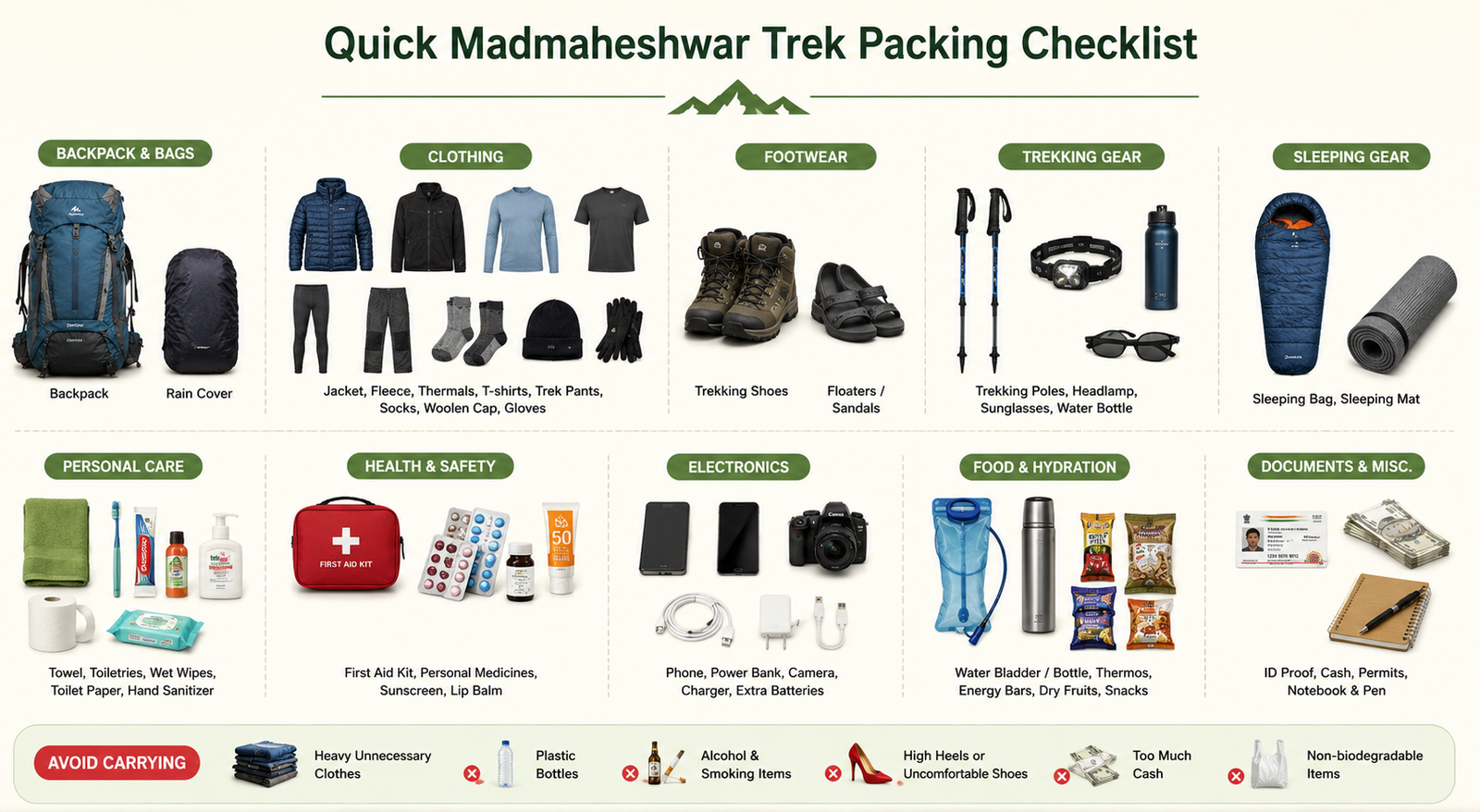
Quick Madmaheshwar Trek Packing Checklist
| Backpack | 30–40 litre backpack for most trekkers; rain cover recommended |
| Footwear | Broken-in trekking shoes with grip + 2–3 pairs of trekking socks |
| Clothing | Quick-dry base layers, fleece or warm layer, insulated jacket, trekking pants |
| Rain Protection | Poncho or waterproof jacket, backpack cover and dry bags |
| Hydration | Reusable water bottle, electrolyte sachets and light snacks |
| Health | Personal medicines, basic first-aid kit, sunscreen, lip balm and toiletries |
| Documents | Government photo ID, booking details, emergency contacts and some cash |
A simple packing rule is to divide gear into three groups: wear while walking, keep within quick reach, and store for camp. This prevents repeated unpacking and makes weather changes easier to handle.
1. Choose the Right Backpack and Keep the Load Light
For most people, a 30–40 litre backpack is enough if you avoid duplicates. Choose padded shoulder straps, a hip belt and a chest strap so the load stays stable on climbs and descents. Add a rain cover, and keep clothes, documents and electronics inside dry bags or zip pouches.
Keep rainwear, water, snacks and a warm layer near the top. Pack heavier items close to your back. If the bag feels difficult to carry for several hours, remove non-essential items before leaving Ransi.
2. Clothing: Pack in Layers, Not in Bulk
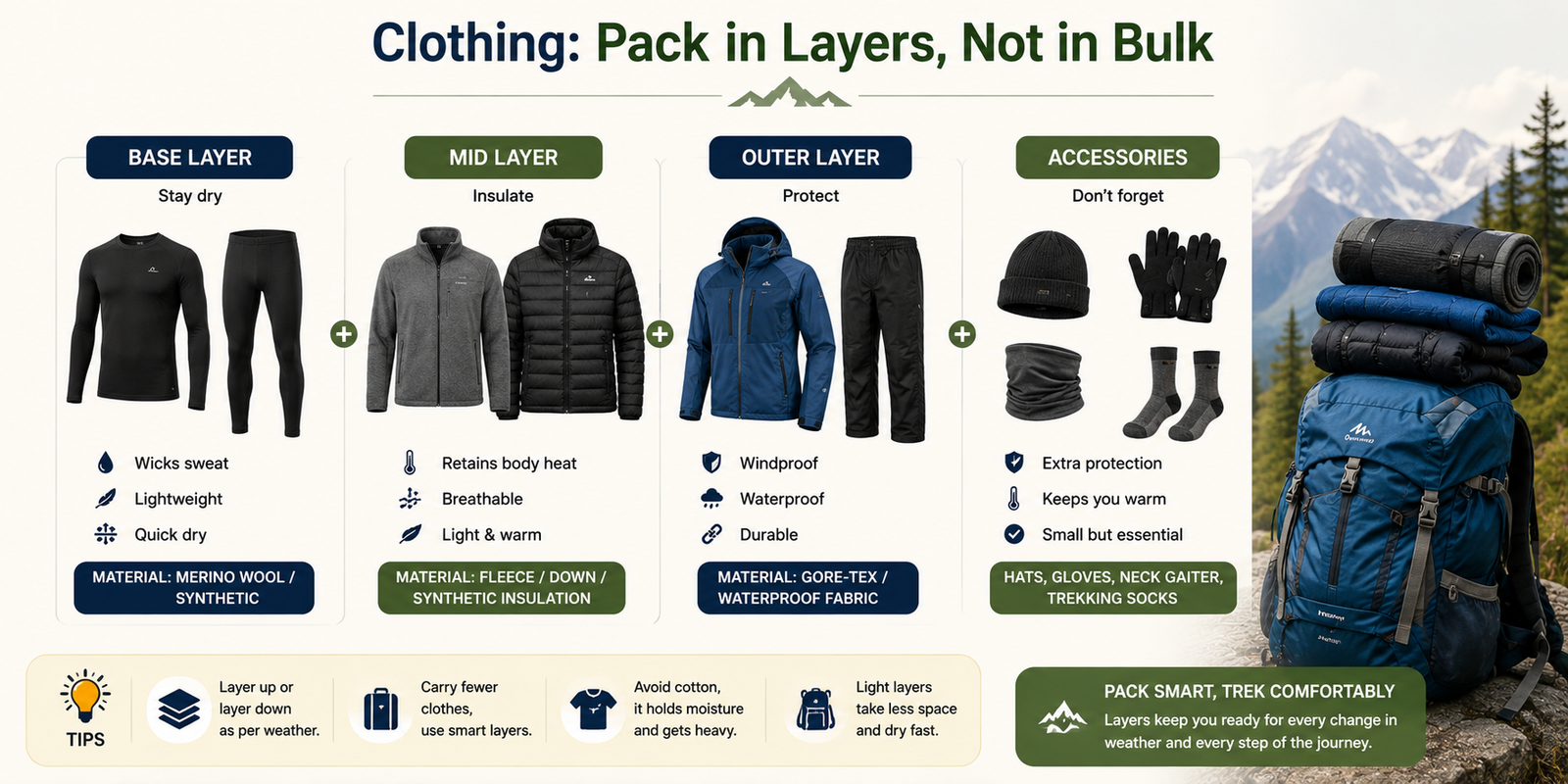
Himalayan weather can change quickly, so layering works better than carrying bulky clothing. Use a moisture-wicking base layer, add a fleece or light wool layer, and carry an insulated jacket for cold mornings and evenings. Keep rain protection accessible.
Carry two trekking T-shirts, one warm mid-layer, one insulated jacket, two trekking pants, thermal innerwear when needed, underwear and sleepwear. Prefer quick-dry fabrics over heavy cotton. Add a warm cap, sun cap, light gloves and neck gaiter.
Packing should change with the season. Check the best time to visit Madmaheshwar page before finalising layers, because May–June and September–October can require different combinations of rain protection and insulation.
3. Trekking Shoes and Socks: Do Not Experiment on the Trail
Footwear is one of the most important parts of the Madmaheshwar Trek packing list. Use broken-in trekking shoes with reliable grip and stability on wet stone, mud and uneven sections. New footwear can create blisters, pressure points or heel pain after a few hours.
Carry two or three pairs of trekking socks and keep one dry pair for the evening. Lightweight slippers are useful around your stay, but not on the main trail. Avoid smooth-soled sneakers and heavy boots you have never worn before.
4. Rain, Sun and Cold Protection
Carry rain protection even outside the monsoon. A poncho or waterproof shell works well, while a backpack rain cover plus internal dry bags protects clothes and electronics. An umbrella is optional but less useful on windy or narrow trail sections.
At altitude, sun exposure can be strong even when the air feels cool. Carry UV-protection sunglasses, SPF 30+ sunscreen, lip balm with SPF and a cap. In colder periods, gloves and a warm cap are useful after sunset and during early starts.
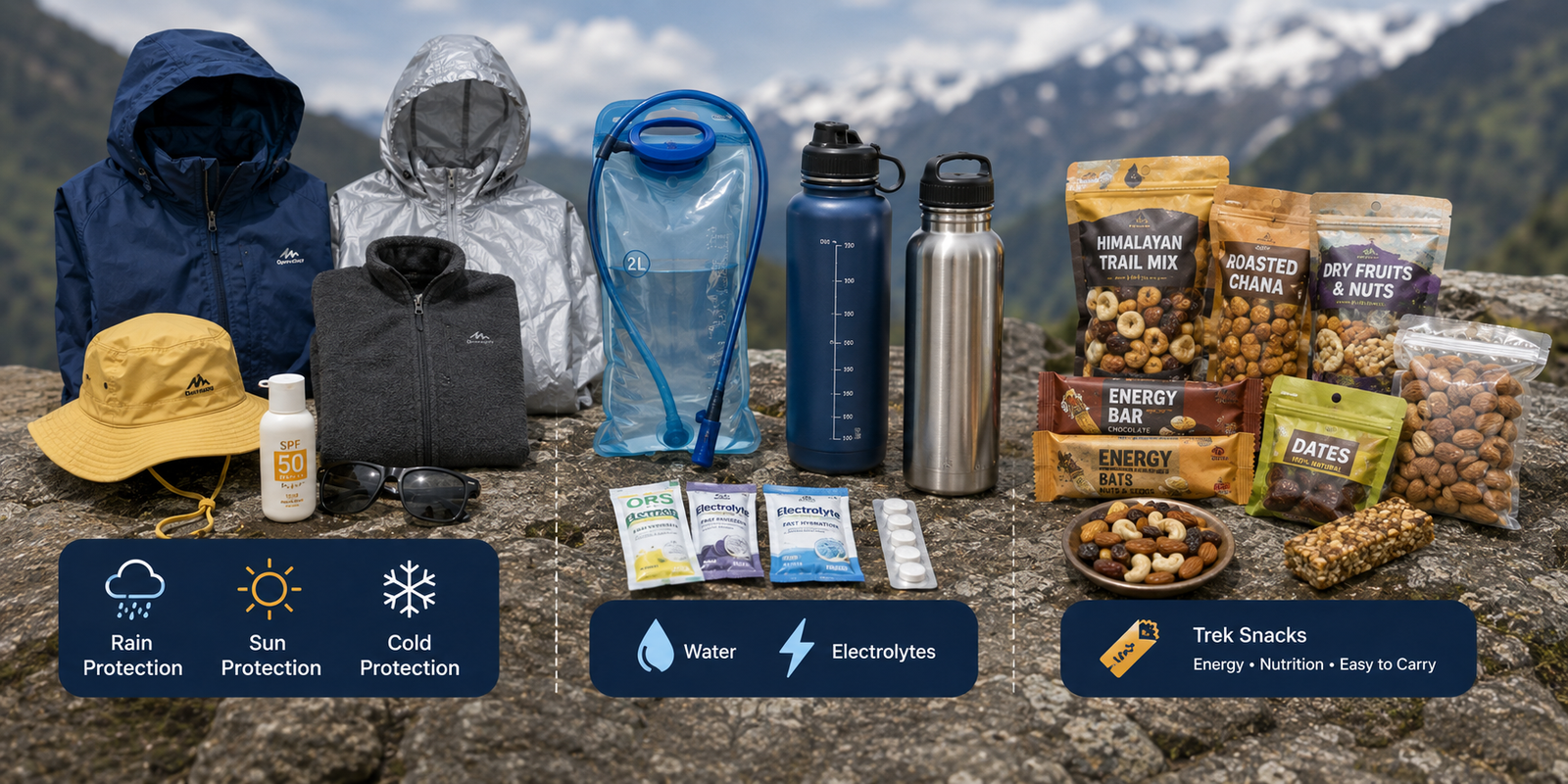
5. Water, Electrolytes and Trek Snacks
A reusable water bottle is essential. Carry enough for the section ahead and refill where reliable options are available. Sip regularly rather than waiting until you feel very thirsty. Electrolyte sachets can be useful after long climbs.
Carry compact snacks such as nuts, raisins, energy bars, chikki or dates. Too much packaged food adds weight and waste. Keep a reusable pouch for wrappers and bring non-biodegradable waste back with you.
6. Medicines, First Aid and Personal Hygiene
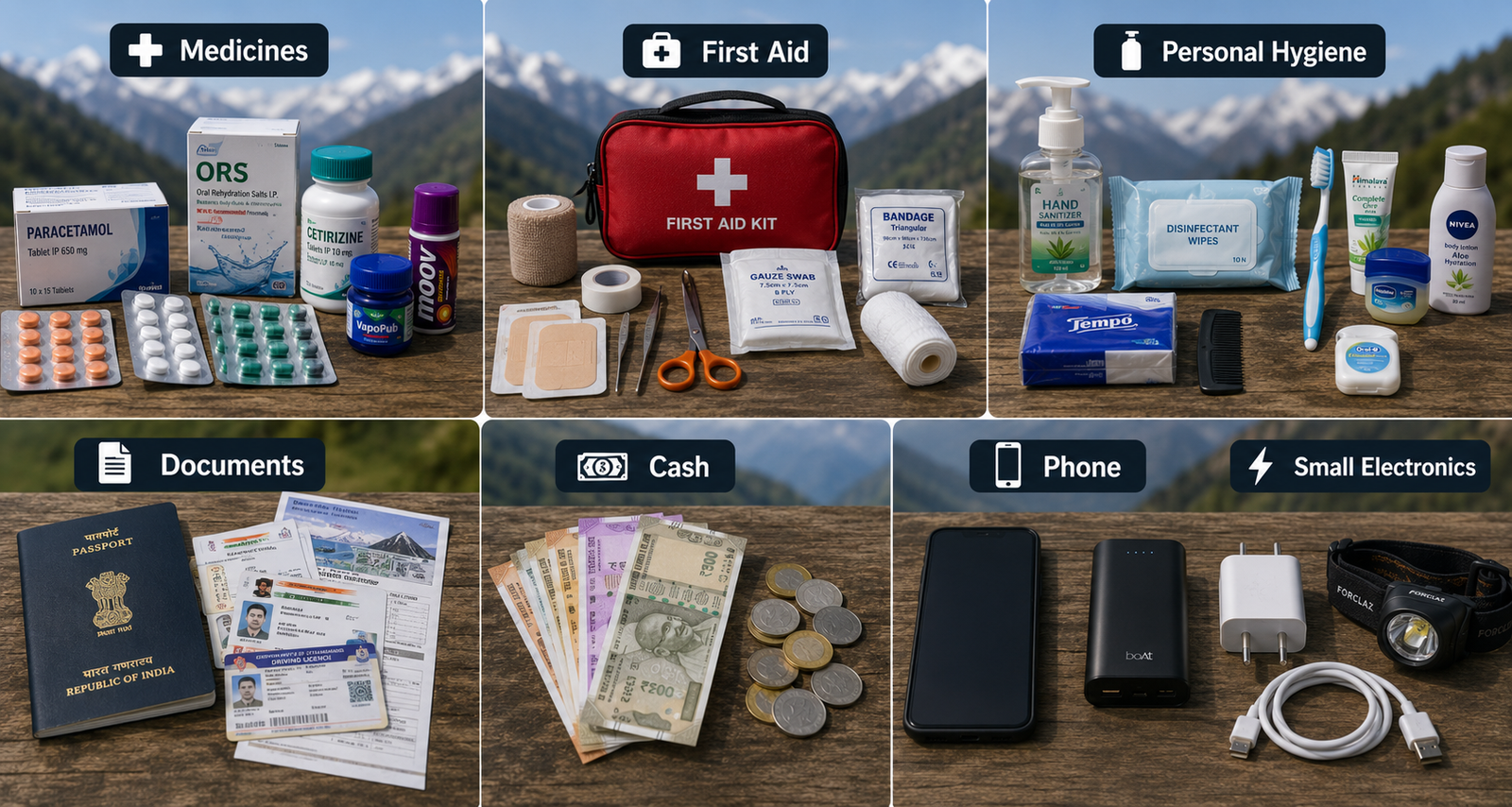
Carry prescribed medicines in clearly labelled packaging with a small extra supply. A basic first-aid kit can include bandages, blister patches, antiseptic wipes, gauze and medical tape. Do not start unfamiliar altitude medicines based only on another trekker’s recommendation.
Add sunscreen, lip balm, hand sanitiser, tissues, biodegradable wet wipes, toothbrush, small toothpaste, menstrual hygiene products if required and a quick-dry towel. Keep toiletries travel-sized. Personal hygiene items can become surprisingly heavy when full-size bottles are packed without thinking.
7. Documents, Cash, Phone and Small Electronics
Keep a government photo ID and key booking details in a waterproof pouch. Carry some cash in smaller denominations because digital payments and connectivity may be unreliable in remote areas. Split cash between two safe places.
Carry a charged phone, power bank, cable and compact headlamp or torch. Download essential information for offline access and keep emergency contacts on the phone and on paper. Avoid extra electronics unless genuinely necessary.
8. Optional Items That Can Be Worth Carrying
Trekking poles can improve balance and reduce knee strain on descents. A light sit mat, microfiber towel, reusable spoon or mug may also be useful depending on your stay arrangement.
A porter can be considered if age, health, group requirements or previous injuries make backpack weight a concern. If you are budgeting for support services, accommodation and other trek expenses, the Madmaheshwar Trek cost guide can help you plan the broader trip budget without overloading your own pack.
9. What to Avoid Carrying on the Madmaheshwar Trek
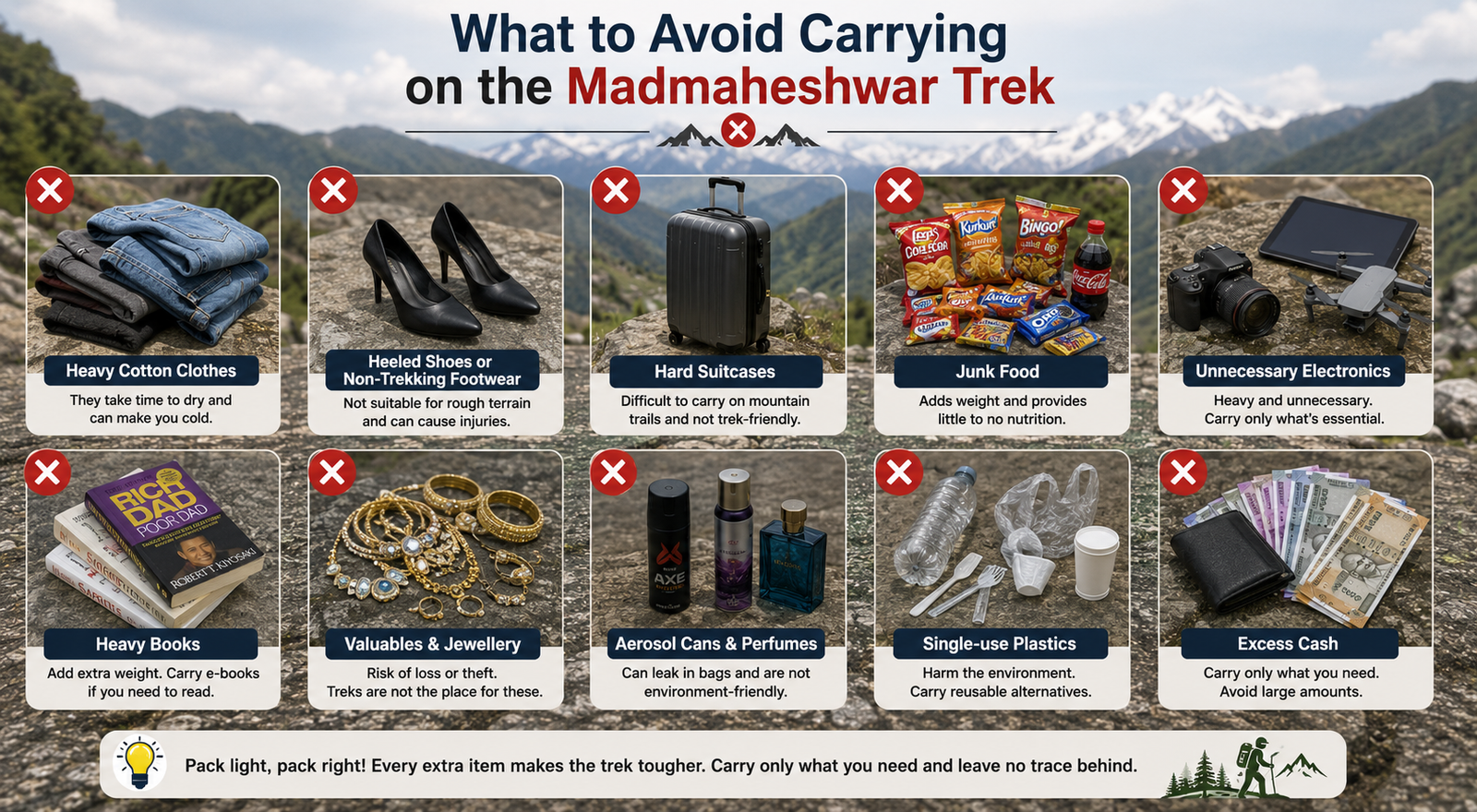
Heavy suitcases: Rolling luggage is unsuitable once the trek begins. Leave it at your roadhead stay and shift essentials to a backpack.
Too many clothes: Extra jeans, multiple jackets and duplicate outfits add weight without improving comfort.
Cotton-heavy clothing: Cotton absorbs sweat and rain and can remain wet for a long time in cool mountain conditions.
Brand-new shoes: The trek is not the place to break in footwear. Use tested shoes and familiar socks.
Glass bottles and bulky containers: They are heavy, fragile and unnecessary when lighter reusable options exist.
Excessive packaged food: It creates avoidable waste and takes valuable backpack space.
Unnecessary valuables: Expensive jewellery, large amounts of cash and non-essential gadgets add risk without helping the trek.
Alcohol: It can worsen dehydration, sleep quality and judgement at altitude. Keep the trek focused on hydration and recovery.
10. Final Packing Check Before You Leave Ransi
Before starting the trail, do a final weight and access check. Wear the packed backpack for ten minutes. If it feels unstable or unusually heavy, remove something. Confirm that rainwear, water and a warm layer are easy to reach and your phone is charged.
Your final Madmaheshwar Trek packing list should remain manageable even when you are tired. Carry essentials that match the route, altitude and season rather than preparing for every possible situation. Combine this checklist with the complete Madmaheshwar trek route guide before departure.
Frequently Asked Questions
Common questions about what to carry and what to avoid while packing for the Madmaheshwar Trek.
1. What size backpack is best for the Madmaheshwar Trek?
A 30–40 litre backpack is usually practical for a short Madmaheshwar trek if you pack efficiently. Choose one with padded straps, a hip belt and a rain cover. If you need to carry additional personal gear, increase capacity only when the extra items are genuinely required.
2. Do I need trekking shoes for Madmaheshwar?
Yes. Trekking shoes with good grip are strongly recommended because the route includes uneven mountain paths, stone sections and possible wet or muddy surfaces. Wear the shoes before the trip so you know they fit correctly and do not create blisters.
3. Should I carry a heavy winter jacket in May or June?
Carry warm layers even in late spring and early summer, but avoid one oversized jacket if a base layer, fleece and packable insulated jacket can provide more flexible warmth. Check the expected conditions before departure and adjust insulation accordingly.
4. Is a raincoat necessary for the Madmaheshwar Trek?
Yes. Mountain weather can change quickly, so carrying a lightweight waterproof jacket or poncho is sensible even when rain is not forecast. A backpack rain cover and internal dry bags help protect clothing, documents and electronics.
5. How much water should I carry?
Carry enough water for the next section of the trail and refill where reliable options are available. The exact amount depends on weather, pace and your personal needs. Avoid carrying excessive water solely as extra weight, but never start a long section without an adequate supply.
6. What is the most common packing mistake on the Madmaheshwar Trek?
Overpacking is one of the most common mistakes. Duplicate clothing, bulky toiletries, unnecessary gadgets and heavy food can make the climb harder. Prioritise tested footwear, weather protection, warm layers, water, medicines, documents and a manageable backpack.