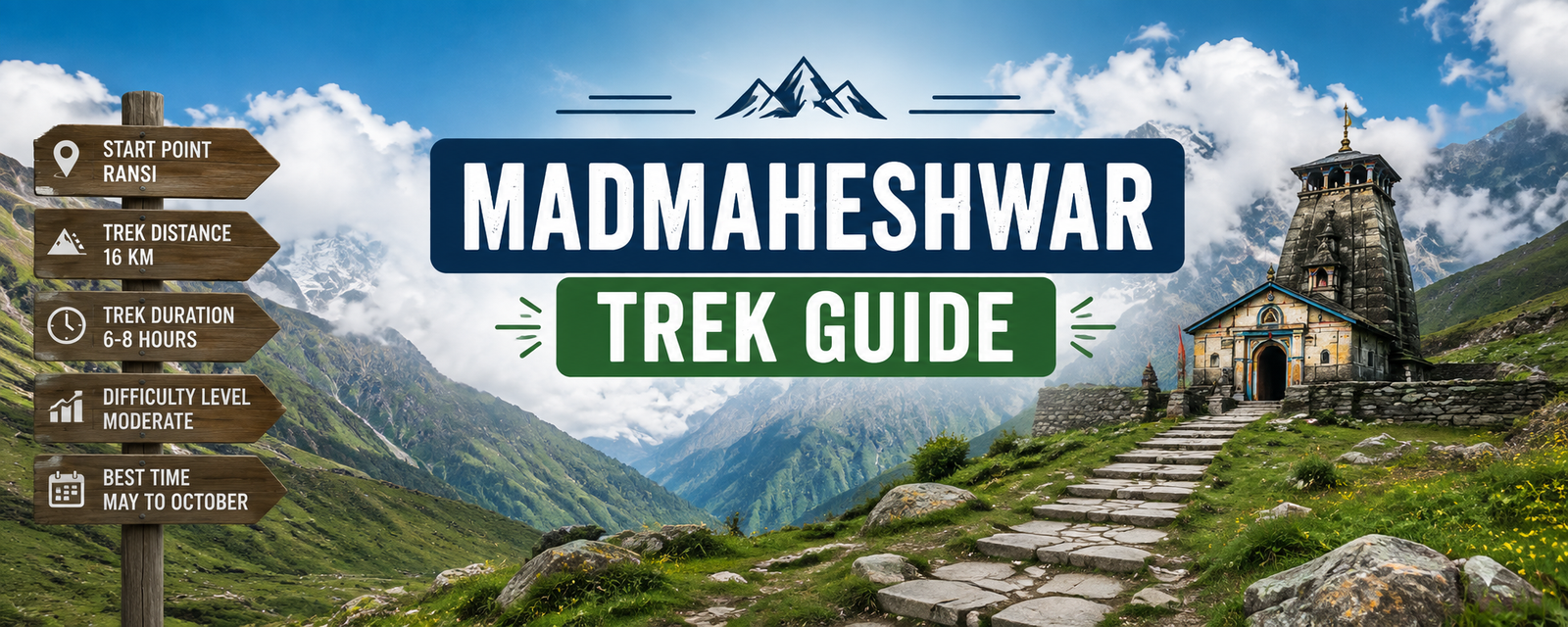
Madmaheshwar Trek Guide: Route, Distance & Difficulty
The Madmaheshwar Trek takes pilgrims and trekkers from the village of Ransi up to one of the five sacred Panch Kedar shrines, set at around 3,289 metres in the Garhwal Himalayas. Known as the Second Kedar, the temple sits amid alpine meadows with close-up views of the Chaukhamba peaks, and the roughly 16-kilometre trail leading up to it offers a genuine mix of forest walking, open ridgelines and steady mountain climbing.
This guide covers everything needed to plan the trek itself — the route, difficulty, permits and
a sample itinerary. For the legend and background behind the shrine, see the Madmaheshwar
Temple History & Mythology guide.
Planning your trek dates and transport? Explore the Madmaheshwar Tour Package for organised travel, accommodation and trek support.
Before you go: road conditions on the final approach to Ransi can shift during monsoon. Check the latest Ukhimath to Ransi road condition update before finalising your travel dates.
Madmaheshwar Trek at a Glance
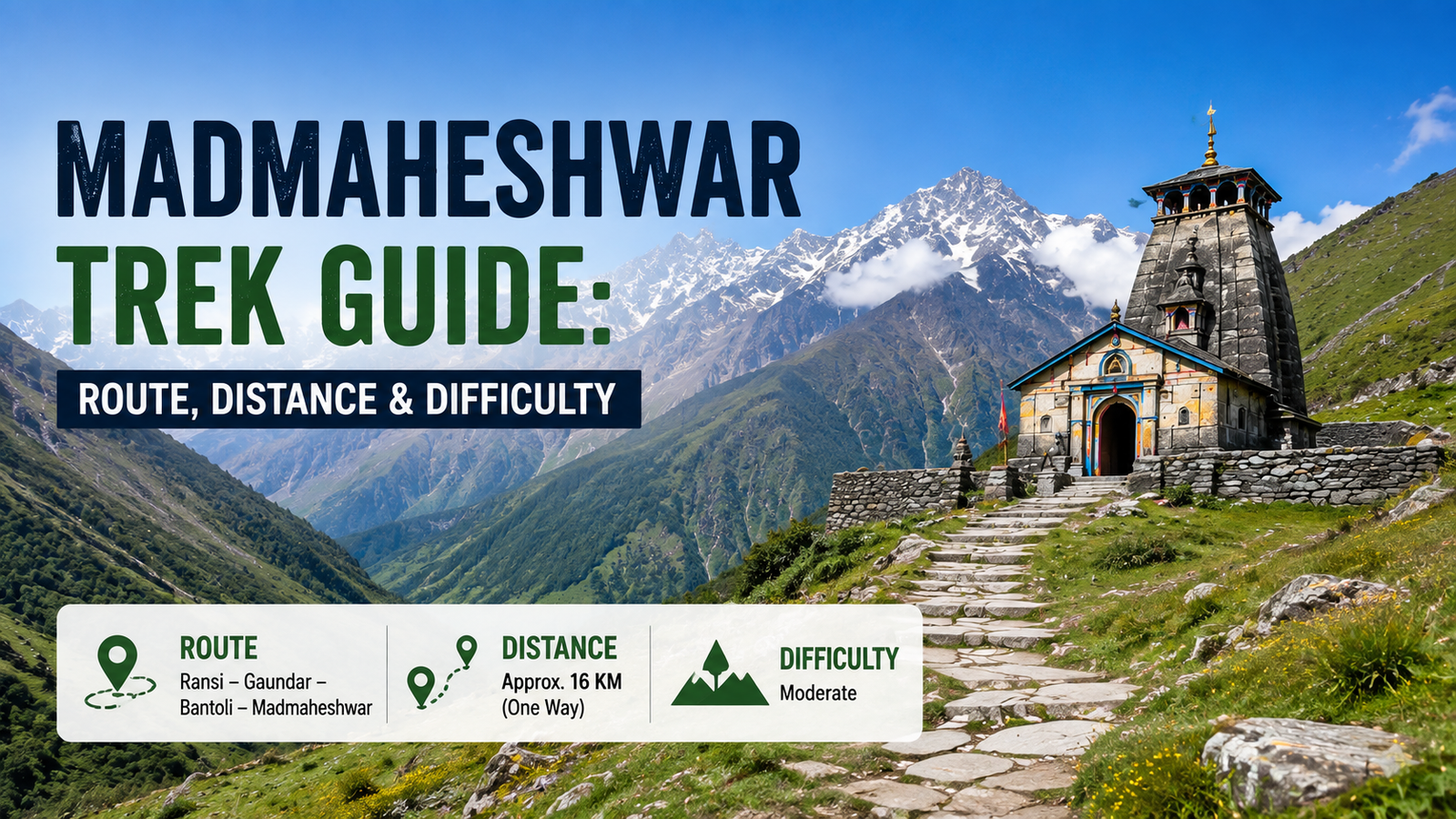
| Base Village | Ransi (last motorable point) |
| Trek Distance | Approximately 16 km one way |
| Altitude | About 3,289 metres at the temple |
| Difficulty | Moderate — steady climb, no technical sections |
| Ideal Duration | 4–5 days including travel to and from Ransi |
| Best Season | May–June and September–October |
These figures give a working overview. The sections below break the journey down stage by stage, from reaching Ransi to standing at the temple itself.
1. How to Reach Ransi, the Trek's Starting Point
Ransi is the last point vehicles can reach, and every Madmaheshwar trek begins here. The typical route runs from Rishikesh or Haridwar through Rudraprayag and on to Ukhimath, followed by a short drive to Guptkashi and finally Ransi. Jolly Grant Airport in Dehradun and Rishikesh railway station are the nearest major transport links, from where a private taxi or shared jeep covers the rest of the hill journey.
Ukhimath itself is worth knowing beyond just a stopover — it is where the ceremonial idol of Madmaheshwar is worshipped at the Omkareshwar Temple once the high-altitude shrine closes for winter, making it a meaningful stop even outside the trekking season.
2. The Trek Route: Ransi to Madmaheshwar
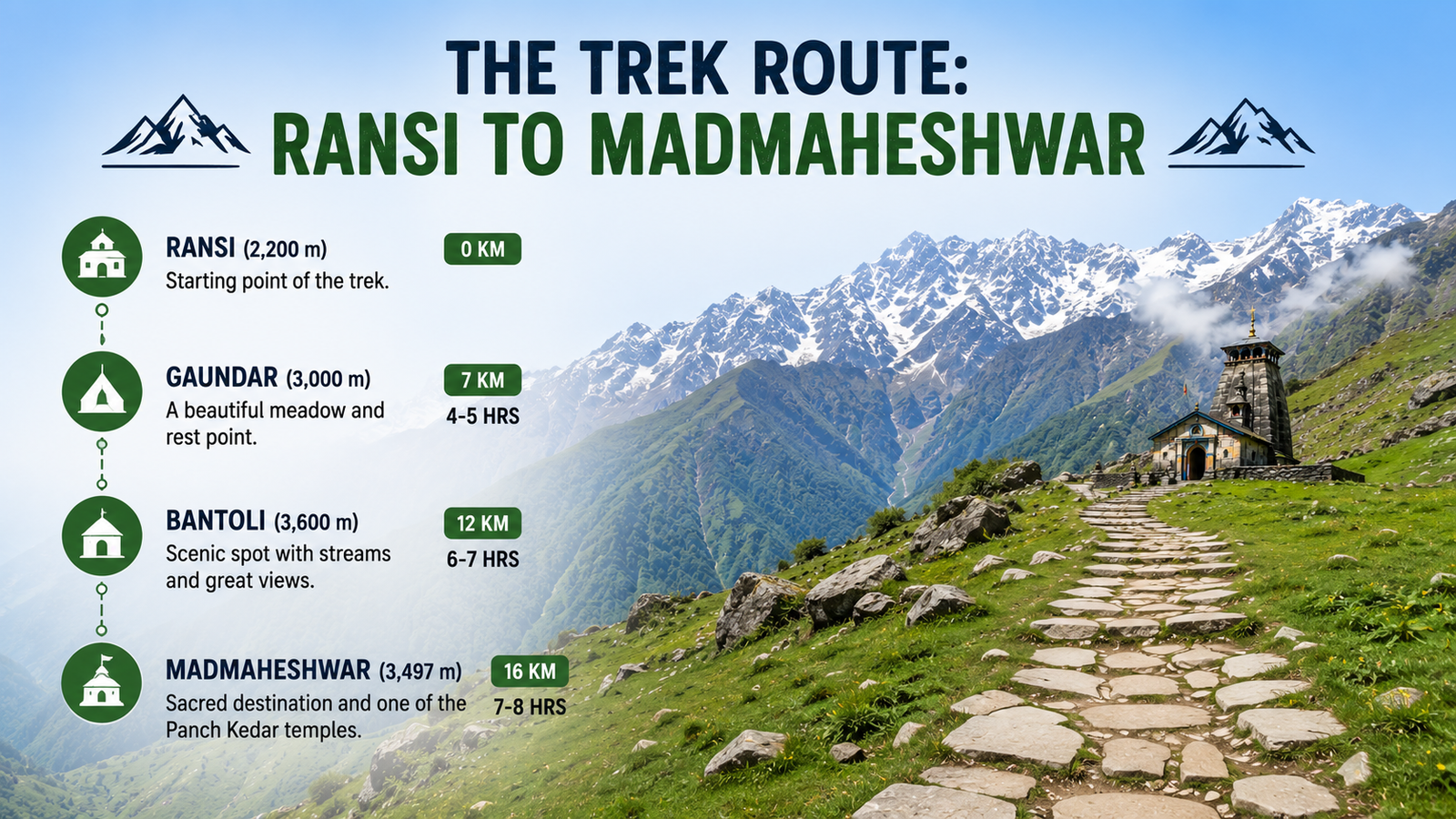
From Ransi, the trail climbs gradually through forested sections before opening into the village of Gaundhar, a common overnight stop roughly midway through the ascent. Beyond Gaundhar, the path continues past Gangi village and through rhododendron and oak forest before emerging into the open meadows that lead to Bantoli and, finally, the temple itself.
The final stretch above the treeline is where the trek's real reward becomes visible, with wide alpine meadows framed by the Chaukhamba massif. Most trekkers find this last section physically easier than the lower forest climb, since the gradient becomes gentler even as the altitude increases.
3. Trek Difficulty and Fitness Level
Madmaheshwar is generally rated a moderate trek. The path is clear and well-trodden, without technical climbing or exposed scrambling sections, but the sustained 16-kilometre ascent and the altitude mean it is more demanding than a short day hike. A basic level of cardiovascular fitness, along with some experience walking for several hours at a stretch, makes the trek considerably more comfortable.
Families travelling with children or senior citizens can still complete the trek with a slower pace and additional support. The Madmaheshwar with Family guide covers age suitability, pony and palki options in more detail.
4. Permits and Registration
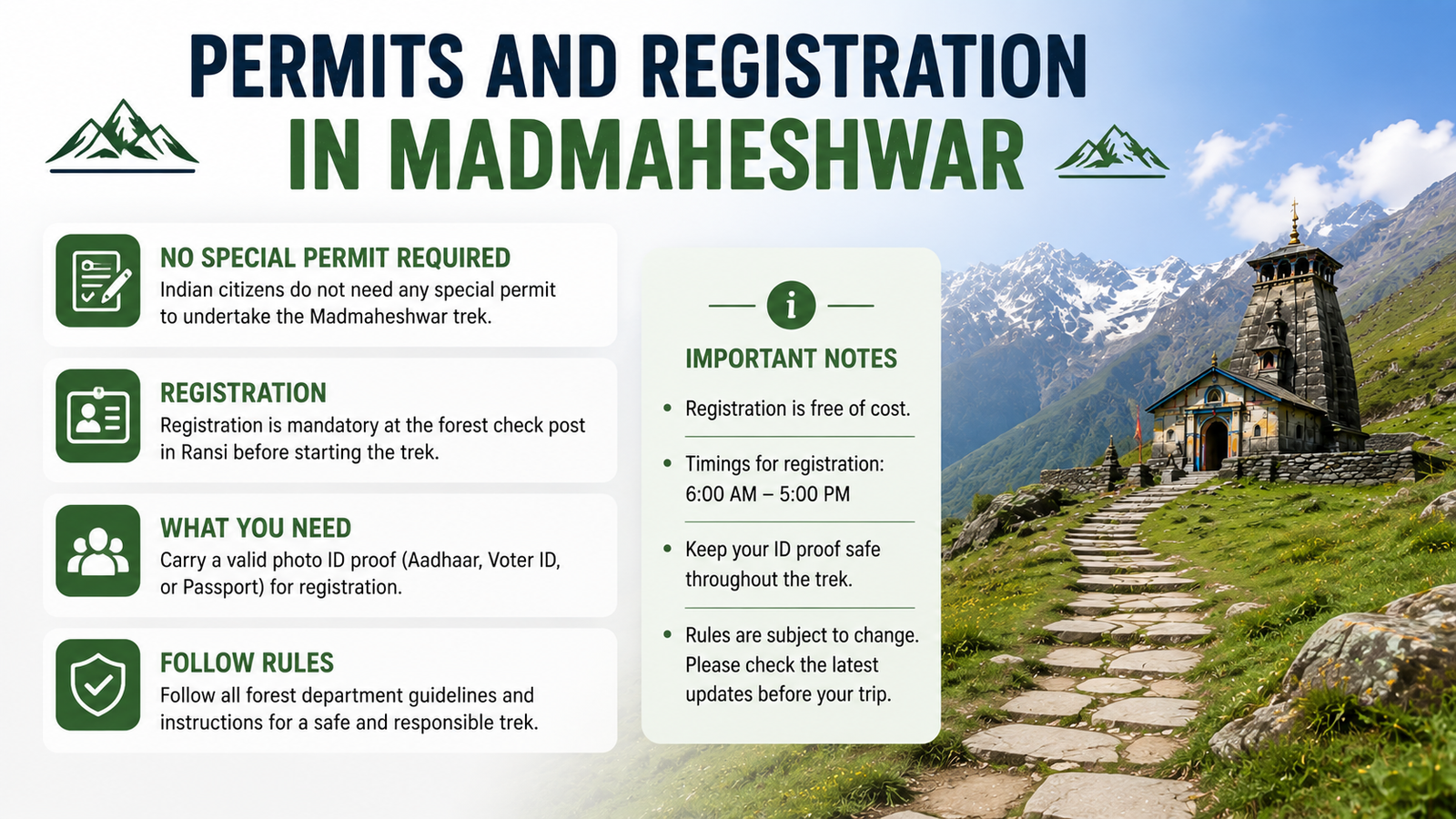
Because the trail passes through the Kedarnath Wildlife Sanctuary, registration is mandatory before starting the climb. Trekkers must check in at the forest check post in Ransi with a valid government-issued photo ID. This process is generally quick during the regular season but is worth planning for, particularly if travelling in a larger group.
5. Accommodation Along the Route
Basic guesthouses and forest rest houses are available at Ransi, Gaundhar and near the temple itself, generally offering simple rooms and vegetarian meals rather than luxury amenities. Tent stays are also common during peak season, particularly at Gaundhar, giving trekkers a bit more flexibility if guesthouse rooms are full.
Booking ahead during the busier weeks of June and October is advisable, since availability at higher points on the route is limited compared with towns like Ukhimath or Guptkashi.
6. Best Time to Attempt the Trek
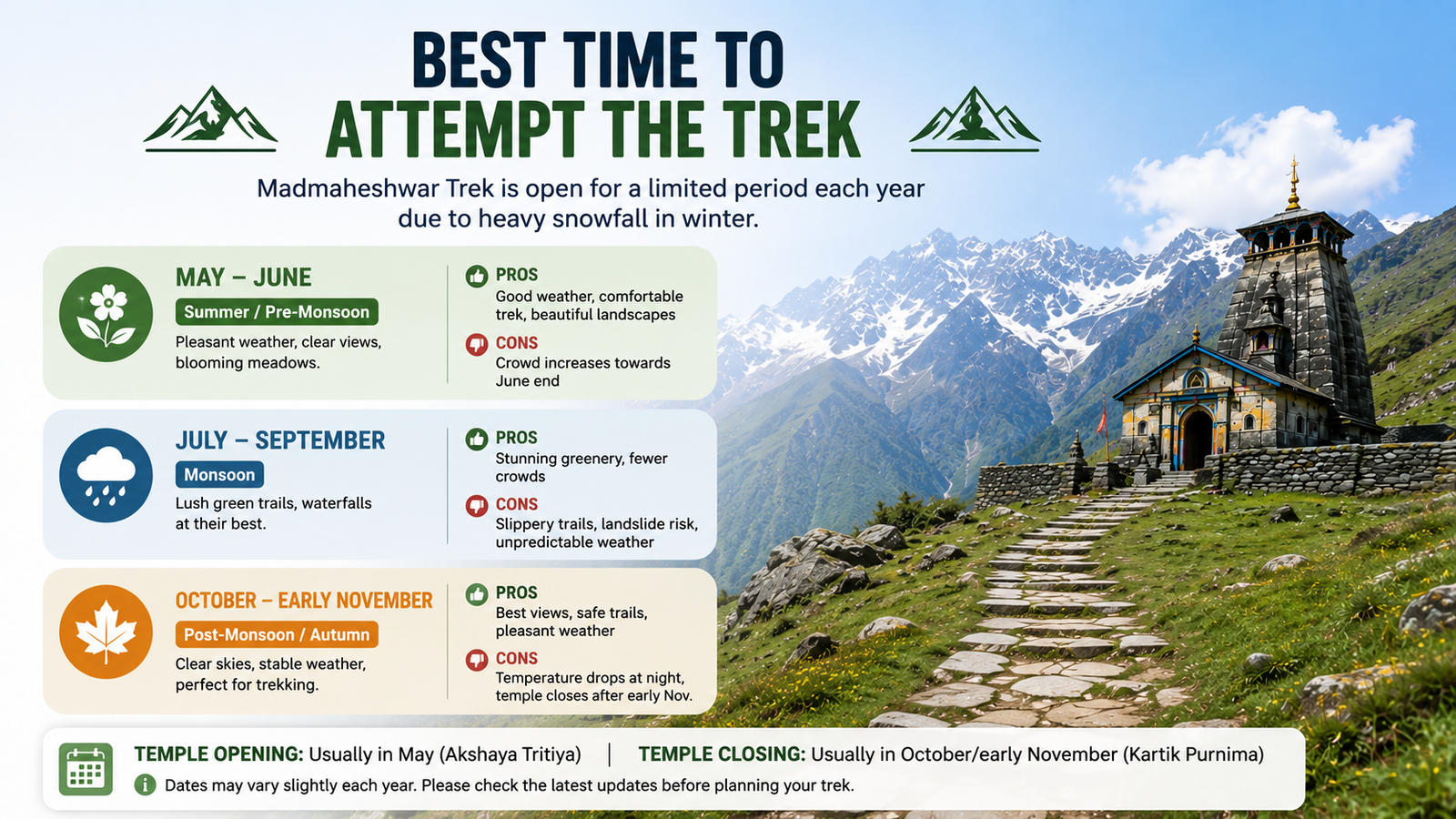
The temple and trail are open roughly from late April or May through late October or November, closing for winter once heavy snowfall sets in. Within that window, May–June and September–October are generally considered the most reliable stretches, offering firmer trails and clearer mountain views than the monsoon months of July and August.
For a full month-by-month breakdown of weather, crowd levels and trail conditions, see the best time to visit Madmaheshwar guide.
7. Sample Madmaheshwar Trek Itinerary
- Day 1: Travel from Rishikesh/Haridwar to Ukhimath or Guptkashi, overnight stay.
- Day 2: Drive to Ransi, register at the forest check post, trek to Gaundhar and stay overnight.
- Day 3: Trek from Gaundhar to Madmaheshwar temple via Gangi and Bantoli, darshan and overnight stay near the temple.
- Day 4: Descend from Madmaheshwar back to Ransi, drive to Ukhimath or Guptkashi.
- Day 5: Return journey to Rishikesh/Haridwar or onward travel.
Families, slower walkers or anyone wanting more time to rest can extend this to 5–6 days by splitting the ascent or descent into shorter stages.
8. What to Pack and Prepare
Layered clothing, broken-in trekking shoes, rain protection and basic medicines all matter more on a trek like this than they might elsewhere, given the altitude and changeable Himalayan weather. The Madmaheshwar trek packing list covers a complete checklist so nothing essential gets left behind.
9. Planning Your Madmaheshwar Trek
Madmaheshwar rewards trekkers who plan sensibly rather than rush the climb — a steady pace, the right season, and proper registration make the difference between a demanding walk and a genuinely memorable pilgrimage through some of Garhwal's quietest high-altitude meadows. Once your route and dates are set, explore the available Madmaheshwar trek packages to arrange guides, stays and permits together.
Frequently Asked Questions
Common questions about the Madmaheshwar Trek route, distance and difficulty.
1. How long is the Madmaheshwar trek?
The Madmaheshwar trek covers roughly 16 kilometres one way from Ransi, the last motorable point, up to the temple at around 3,497 metres. Most trekkers cover this in two stages, with an overnight stop at Gaundhar or Bantoli on the way up.
2. What is the difficulty level of the Madmaheshwar trek?
Madmaheshwar is considered a moderate trek. The trail is well-defined with a steady, sustained climb through forest and meadow sections rather than technical terrain, but the altitude and distance mean a reasonable level of fitness is needed.
3. How do I reach Ransi, the base of the Madmaheshwar trek?
Ransi is reached by road via Rishikesh or Haridwar, continuing through Rudraprayag and Ukhimath to Guptkashi, and then a final stretch from Ukhimath to Ransi. Jolly Grant Airport in Dehradun and Rishikesh railway station are the nearest transport hubs.
4. Is permission required for the Madmaheshwar trek?
Yes. Since the trail passes through the Kedarnath Wildlife Sanctuary, trekkers must register with a valid photo ID at the forest check post in Ransi before starting the climb.
5. What is the altitude of Madmaheshwar temple?
The Madmaheshwar temple sits at approximately 3,497 metres above sea level in the Garhwal Himalayas, offering close-up views of the Chaukhamba peaks.
6. How many days are needed for the complete Madmaheshwar trek?
A standard itinerary takes around 4 to 5 days including travel to and from Ransi, with 2 days for the ascent and descent on the trail itself. Families or slower walkers often add one extra day for a more comfortable pace.