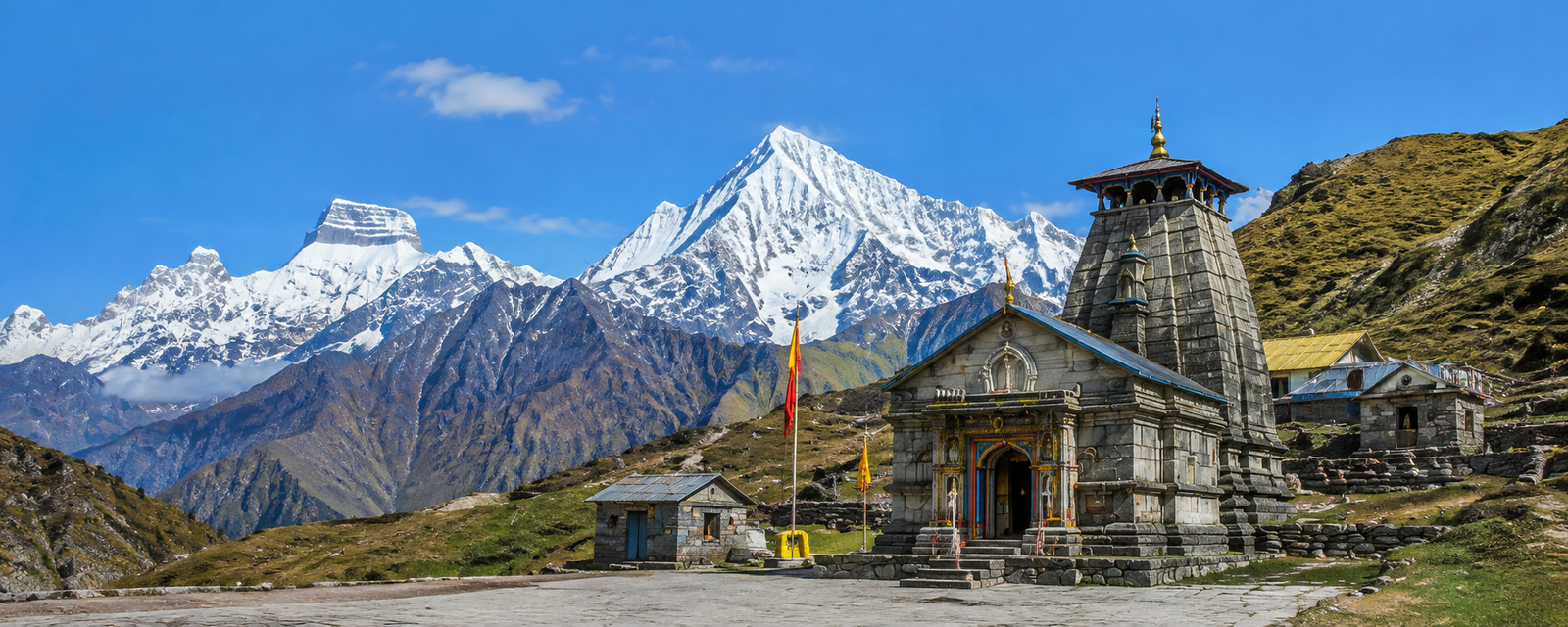
Madmaheshwar Temple History & Mythology: The Sacred Story Behind the Second Kedar
The history and mythology of Madmaheshwar Temple are woven so closely together that it is difficult to speak of one without the other. Set at an altitude of about 3,289 metres in the Garhwal Himalayas, this stone shrine is the second stop of the revered Panch Kedar pilgrimage and is believed to mark the spot where the middle portion of Lord Shiva's bull form emerged from the earth. For pilgrims and trekkers alike, understanding this legend adds a layer of meaning to every step of the climb from Ransi.
This guide traces the origin story of Madmaheshwar, its place within the Panch Kedar tradition, and the rituals that still connect the temple to the Pandavas of the Mahabharata. If you are planning the trek itself, the Madmaheshwar Trek Guide covers the route and difficulty in detail.
Madmaheshwar Temple: Quick Facts
| Deity | Lord Shiva, worshipped as the middle (madhya) part of the mythical bull form |
| Position in Panch Kedar | Second shrine, visited after Kedarnath |
| Legend Origin | Post-Kurukshetra penance of the Pandavas, Mahabharata tradition |
| Winter Seat | Ceremonial idol worshipped at Ukhimath during closure |
| Base Village | Ransi, reached via Ukhimath and Guptkashi |
| Pilgrimage Season | Temple remains open roughly from late spring to early autumn |
Behind these simple facts lies a story that stretches back to one of Hindu mythology's most enduring epics. Understanding the legend helps explain why the trek to Madmaheshwar is considered as much a spiritual journey as a physical one.
1. The Panch Kedar Legend: Where the Madmaheshwar Story Begins
The mythology of Madmaheshwar cannot be separated from the larger Panch Kedar legend. After the great war of Kurukshetra described in the Mahabharata, the Pandava brothers were troubled by the guilt of killing their own kin, including elders and teachers. Seeking absolution, they turned to Lord Shiva for forgiveness and guidance.
According to tradition, Shiva was reluctant to grant an audience so soon after the bloodshed of war. He is believed to have retreated to the Garhwal Himalayas and taken the form of a bull, hoping to remain hidden among the herds grazing in the region near present-day Guptkashi.
2. Bhima, the Bull, and the Five Sacred Sites
The Pandavas, determined to seek Shiva's blessing, searched the mountains and eventually recognised the bull as an unusual presence among the cattle. Bhima, the second Pandava and the strongest of the five brothers, attempted to catch hold of the bull. As he grasped it, the bull is said to have started sinking into the ground to avoid capture.
Before it could disappear completely, Bhima managed to hold on to a part of its body. In the legend, the bull's form then reappeared in five different places across the Garhwal Himalayas, each becoming a shrine of the Panch Kedar circuit: the hump at Kedarnath, the arms at Tungnath, the face at Rudranath, the matted locks and head at Kalpeshwar, and the middle or navel portion at Madmaheshwar. This is the mythological basis for the temple's name and its place in the pilgrimage sequence.
3. The Meaning Behind the Name "Madmaheshwar"
The name Madmaheshwar is generally understood as a combination of two words: "Madhya," meaning middle, and "Maheshwar," one of the many names of Lord Shiva as the great lord. Together, the name reflects the belief that the middle or navel section of the bull's body manifested at this exact location, distinguishing it from the other four Kedar shrines associated with different parts of the same mythical form.
This naming pattern is consistent across the Panch Kedar sites, where each temple's name is tied directly to the specific body part believed to have appeared there. It is a detail that gives the entire pilgrimage circuit a unified mythological structure rather than five unrelated shrines.
4. Madmaheshwar as the "Second Kedar"
Within the Panch Kedar tradition, Madmaheshwar holds the distinction of being referred to as the Second Kedar, following Kedarnath in the customary order of pilgrimage. While devotees do not always visit the five shrines in strict sequence today, historically the journey was undertaken as a continuous circuit through the mountains, moving from one manifestation of Shiva's bull form to the next.
Its position as the Second Kedar has also shaped local reverence for the temple. Many pilgrims from the Garhwal region consider a visit to Madmaheshwar, alongside Kedarnath, to be particularly significant, since together the two shrines represent the hump and the middle of the same divine form.
5. Temple Architecture and Its Historical Roots
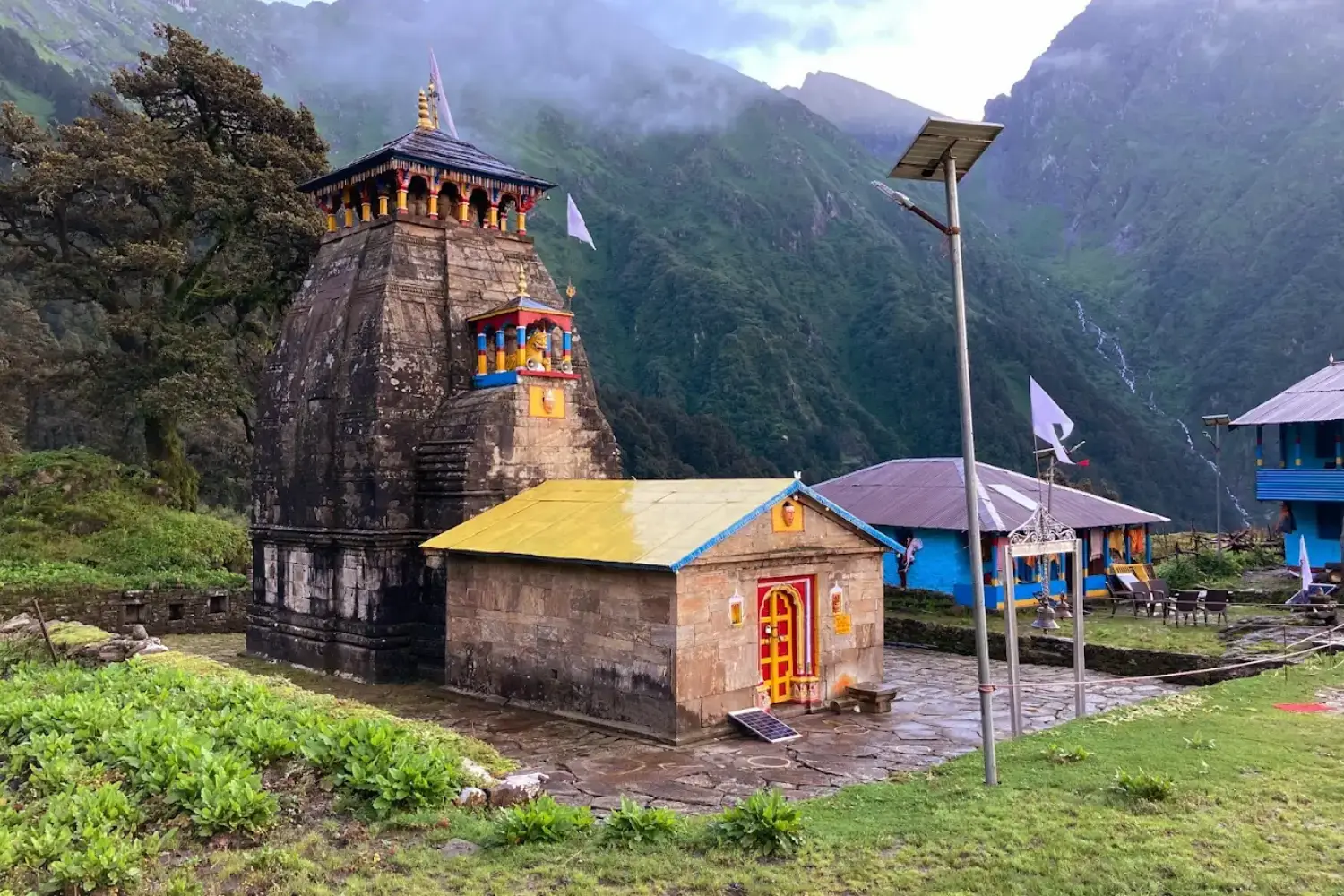
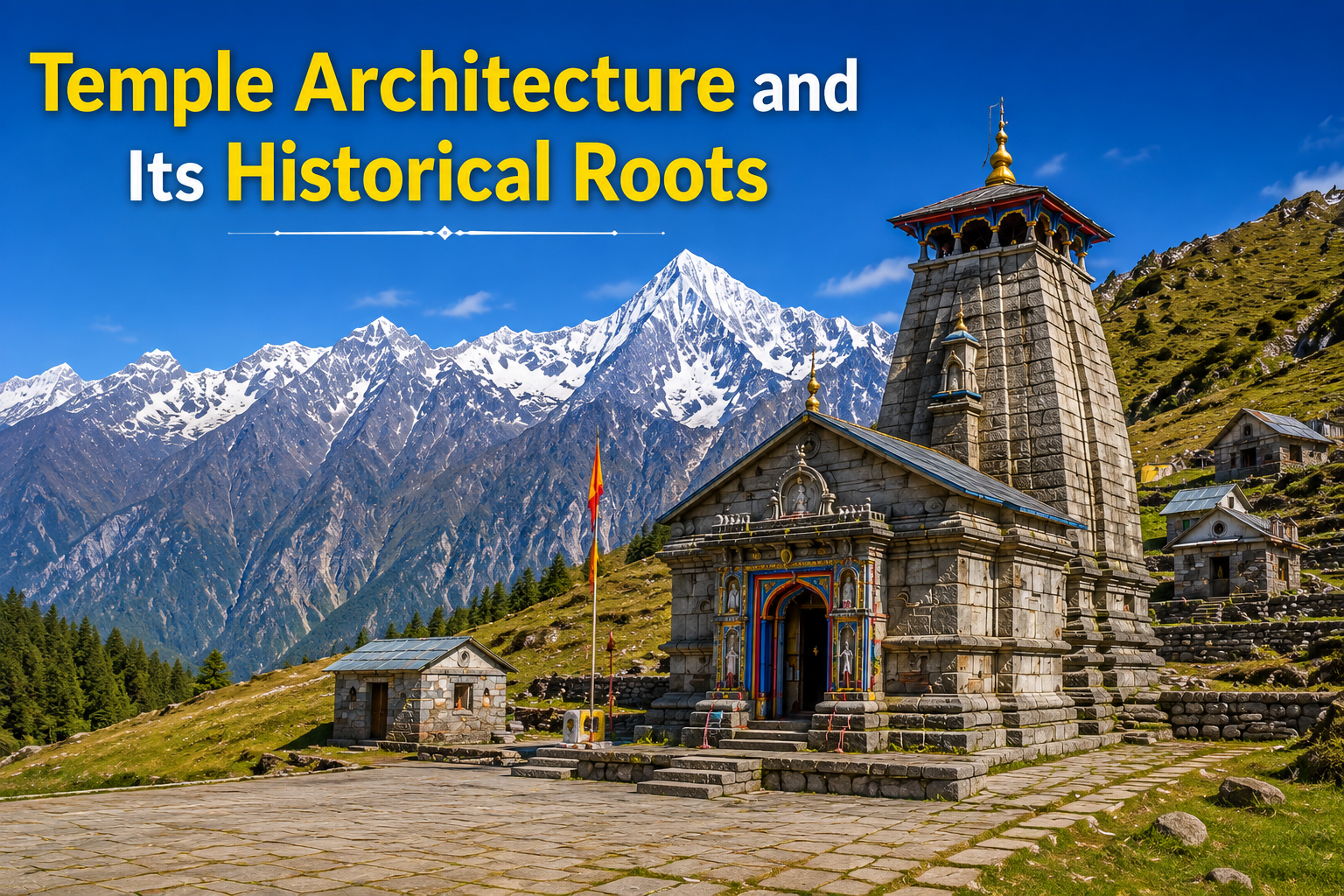
The Madmaheshwar Temple is built in the traditional North Indian Himalayan stone architectural style seen across several ancient Garhwal shrines. Its modest, weathered stone structure, surrounded by alpine meadows and views of the Chaukhamba peaks, reflects centuries of construction suited to high-altitude conditions rather than elaborate ornamentation.
While no single inscription definitively dates the temple's founding, its architectural style and its integration into the broader Panch Kedar tradition place its origins in the early medieval period of Himalayan temple building, a time when several shrines across Garhwal and Kumaon were constructed or consolidated under royal and religious patronage.
6. Religious Significance in Garhwali Tradition
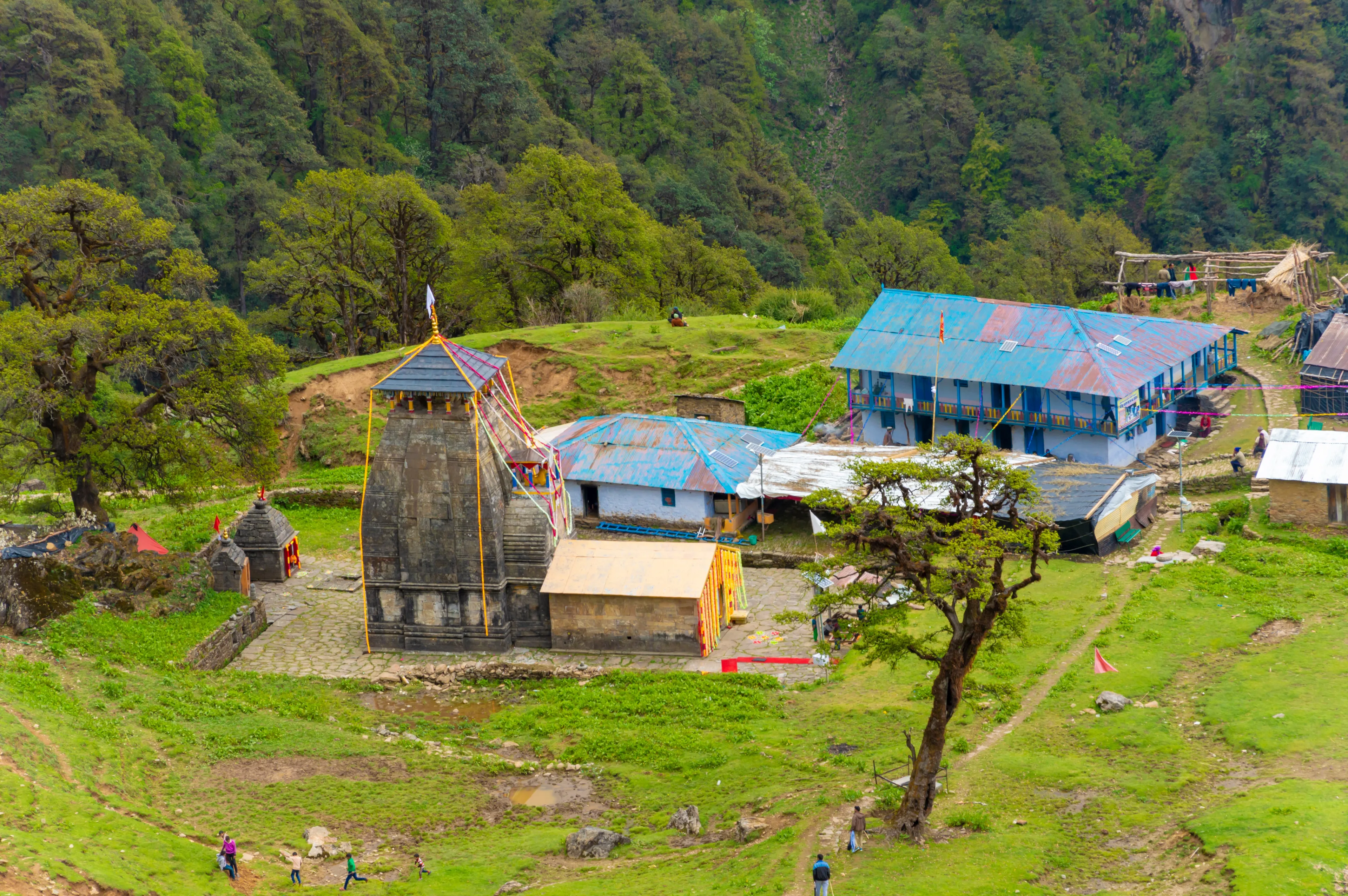
Beyond its connection to the Mahabharata, Madmaheshwar occupies an important place in the daily religious life of the Garhwal region. Local communities, particularly those from villages such as Ransi, Gaundhar and Gangi along the trek route, have traditionally served as custodians, guides and priests associated with the temple's rituals across generations.
The temple is also linked administratively and ritually to Kedarnath and the wider Kedar Peeth tradition, sharing priests, customs and, in some periods, ceremonial arrangements with the other Panch Kedar shrines. This shared lineage reinforces the belief that all five temples are expressions of one continuous mythological event.
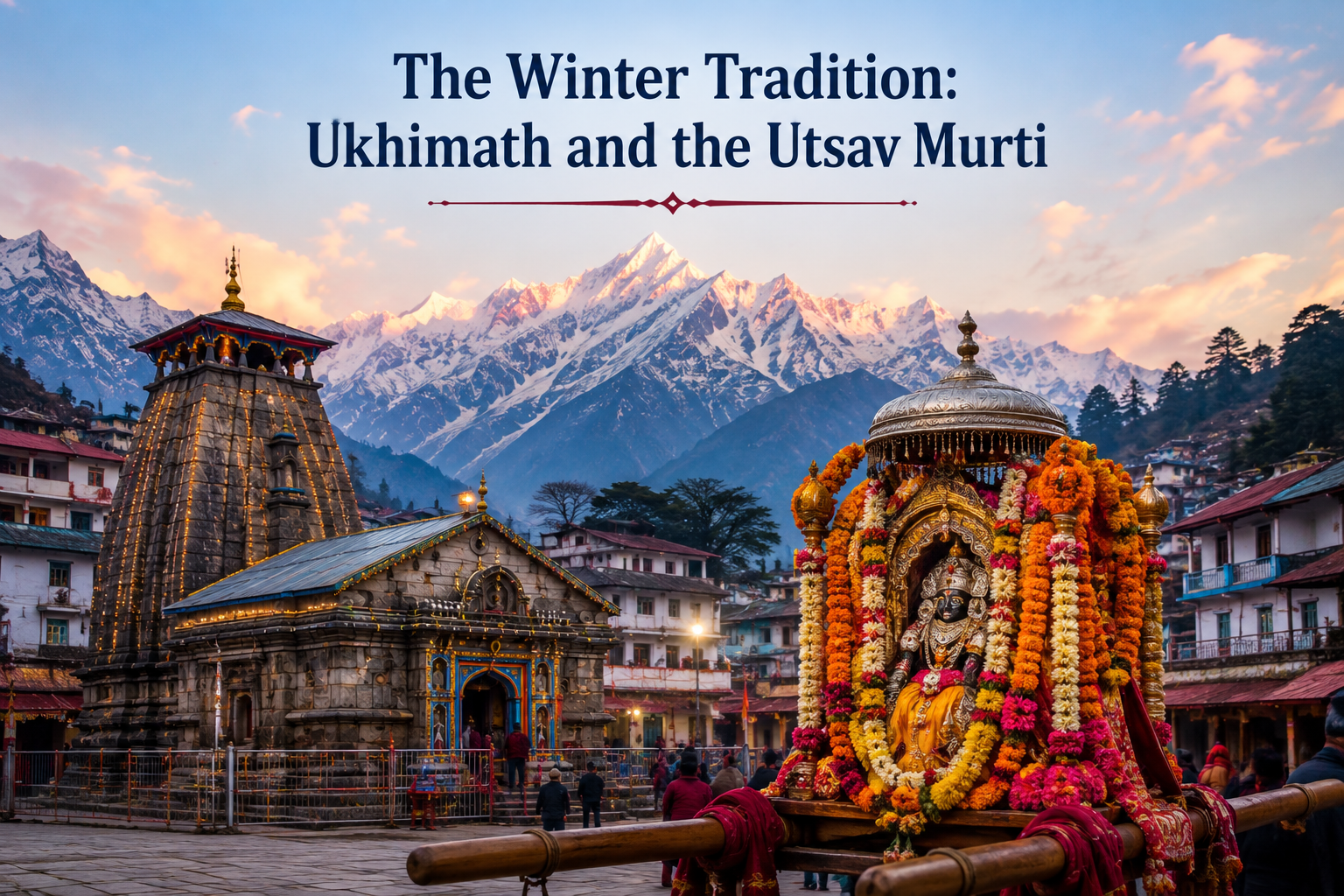
7. The Winter Tradition: Ukhimath and the Utsav Murti
Like other high-altitude Himalayan shrines, Madmaheshwar cannot remain open through the harsh winter months, when heavy snowfall makes the region inaccessible. Following a custom shared with several Panch Kedar temples, the ceremonial idol, known as the utsav murti, is carried down in a formal procession and worshipped at Ukhimath until the temple reopens. Madmaheshwar Opening & Closing Dates 2026
This seasonal migration of worship is itself considered part of the temple's living history. It reflects centuries of adaptation to the Himalayan climate while ensuring that devotion to Madmaheshwar continues uninterrupted, even when the shrine itself lies buried under snow. If you are planning a visit around the opening season, the best time to visit Madmaheshwar guide explains the temple's approximate opening and closing pattern.
8. How the Legend Shapes the Pilgrimage Experience Today
For many pilgrims, knowing the mythology behind Madmaheshwar changes how the trek itself feels. The 16-kilometre climb from Ransi is often described not simply as a trek but as a journey retracing, in spirit, the path the Pandavas are believed to have taken in search of penance and forgiveness.
This connection between landscape and legend is part of what distinguishes the Panch Kedar circuit from many other Himalayan treks. Every ridge, meadow and river crossing along the way carries a layer of meaning tied back to the original story, making the destination feel earned rather than simply reached. Pilgrims preparing for the climb often find it useful to pair this historical background with a practical Madmaheshwar trek packing list so the focus can stay on the experience itself.
9. Why the History of Madmaheshwar Still Matters
Temples like Madmaheshwar endure not only because of their physical remoteness but because the stories attached to them continue to be told, retold and lived out through pilgrimage. The legend of the bull, the devotion of the Pandavas, and the naming of the shrine after the middle portion of Shiva's form together form a narrative that has outlasted centuries of political and social change in the Himalayas.
Whether approached as a matter of faith, history or cultural heritage, the story of Madmaheshwar Temple offers a meaningful lens through which to understand the wider Panch Kedar tradition. Those planning to experience it firsthand can explore the available Madmaheshwar trek packages to combine this mythological journey with a well-organised pilgrimage.
Frequently Asked Questions
Common questions about the history and mythology of Madmaheshwar Temple.
1. Why is Madmaheshwar called the Second Kedar?
Madmaheshwar is called the Second Kedar because it is the second shrine visited in the Panch Kedar pilgrimage sequence and is believed to mark the spot where the middle portion of Lord Shiva's bull form appeared after Kedarnath.
2. What does the name Madmaheshwar mean?
Madmaheshwar comes from "Madhya," meaning middle, and "Maheshwar," another name for Lord Shiva. Together the name refers to the belief that the navel or middle part of Shiva's bull form manifested at this location.
3. What is the Panch Kedar legend connected to Madmaheshwar?
According to the legend, Lord Shiva took the form of a bull to avoid the Pandavas after the Kurukshetra war. When Bhima caught the bull, it dived into the ground and its body parts reappeared at five different locations, with the middle portion emerging at Madmaheshwar.
4. Is Madmaheshwar mentioned in the Mahabharata?
The Panch Kedar legend is closely associated with the Pandavas of the Mahabharata and their quest for penance after the war, though the specific temple narrative has been preserved mainly through regional Garhwali oral tradition rather than the core Sanskrit epic.
5. Where is the deity of Madmaheshwar worshipped in winter?
During winter, when the Madmaheshwar temple closes due to heavy snowfall, the utsav murti (ceremonial idol) is brought down and worshipped at Ukhimath, following a tradition shared with other Panch Kedar shrines.
6. How old is the Madmaheshwar Temple?
The exact founding date is not precisely recorded, but the temple's stone architecture and its association with the Panch Kedar tradition place its origins in the early medieval period of Himalayan temple building, with the surrounding legend rooted in much older oral tradition.