Madmaheshwar Trek: Complete Guide for First-Time Trekkers
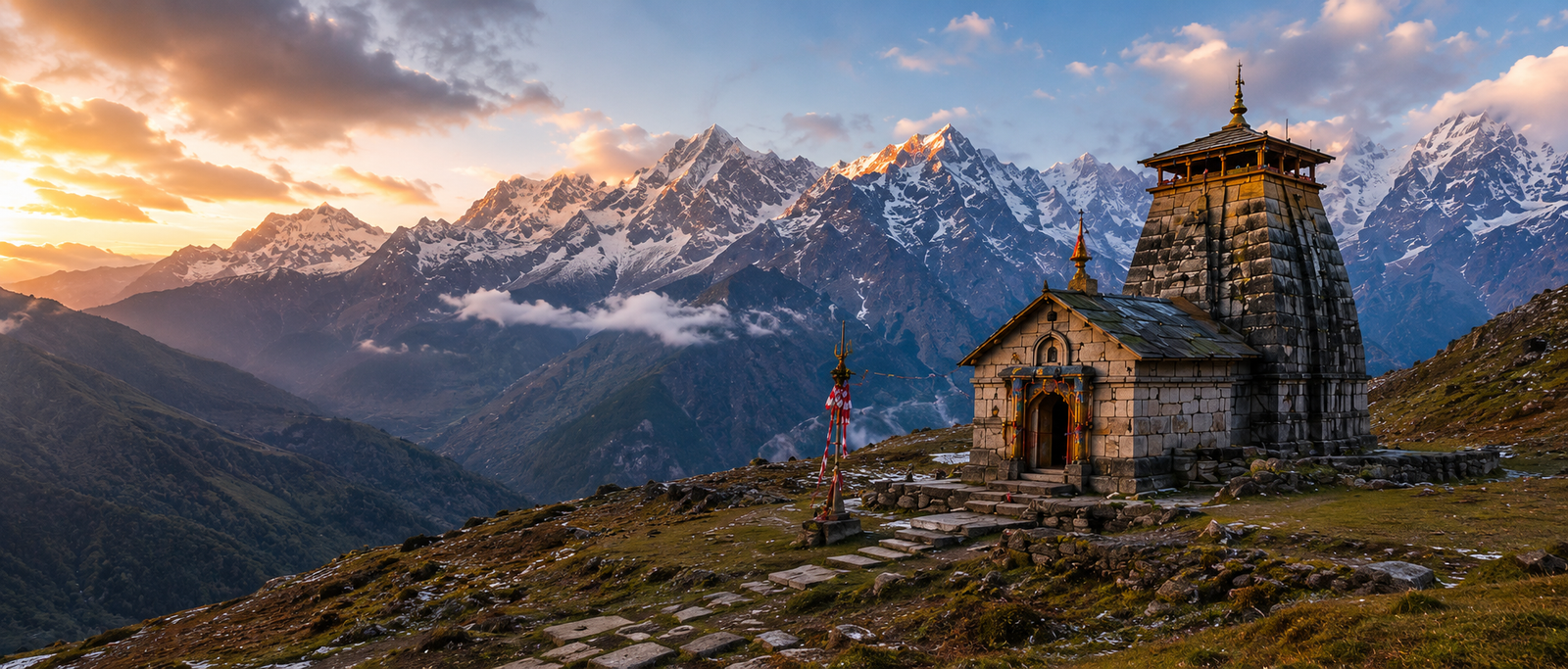
Madmaheshwar is one of the five sacred shrines of the Panch Kedar, dedicated to Lord Shiva. Nestled in the Rudraprayag district of Uttarakhand at an altitude of 3,289 meters, this centuries-old stone temple sits inside the Kedarnath Wildlife Sanctuary, surrounded by rhododendron forests, high-altitude meadows, and views of peaks like Chaukhamba and Kedarnath.
Unlike Kedarnath, there is no helicopter or motorable road to Madmaheshwar — the temple can only be reached on foot, which is part of what keeps this trek quiet, unspoiled, and deeply rewarding. This guide walks you through everything a first-time trekker needs: the route, difficulty, permits, best season, packing list, and safety tips, based on how the trek is actually done on the ground.
1. About Madmaheshwar Temple
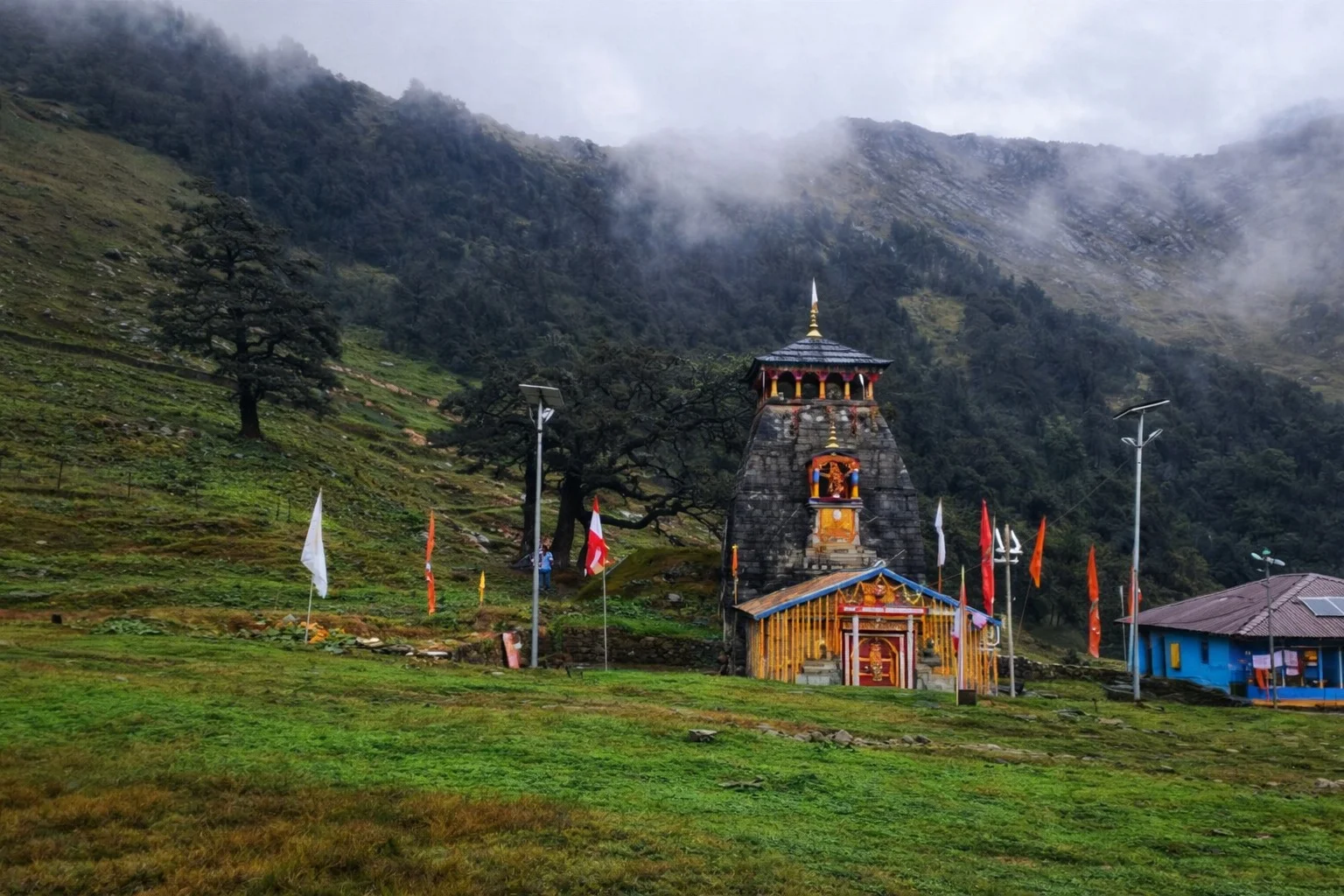
Madmaheshwar Temple, also known as Madhyamaheshwar Temple, is one of the sacred Panch Kedar temples dedicated to Lord Shiva in Uttarakhand. According to Hindu tradition, it is believed to be the place where Lord Shiva’s navel appeared in the form of a bull. Located in a peaceful Himalayan meadow, the temple is surrounded by stunning mountain peaks and alpine landscapes. The nearby Buda Madmaheshwar offers beautiful views of Chaukhamba and is a major highlight of the Madmaheshwar Trek. The temple remains open seasonally, generally from May or June to October or November, depending on weather conditions.
2. How to Reach Madmaheshwar
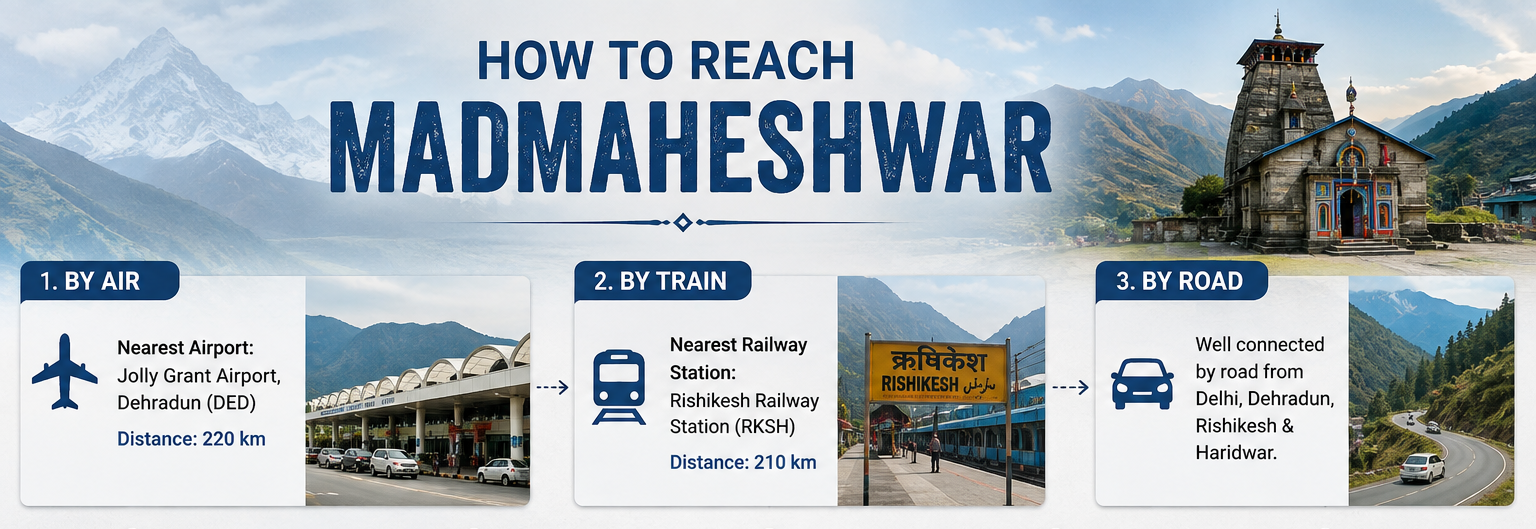
Ransi Village is the last point you can reach by vehicle — everything beyond it is on foot. Most trekkers base themselves in Ukhimath or Guptkashi the night before, since both towns sit closer to Ransi than Rishikesh or Haridwar.
By Road: Drive from Rishikesh, Haridwar, or Dehradun to Ransi via Rudraprayag and Ukhimath. The run from Rishikesh takes roughly 8–9 hours by private taxi.
By Public Transport: State buses and shared taxis run from Rishikesh and Rudraprayag up to Ukhimath; from there, shared jeeps cover the last stretch to Ransi.
By Rail & Air: Rishikesh Railway Station is the nearest railhead, well connected to Delhi and Haridwar. Jolly Grant Airport, Dehradun, is the nearest airport, roughly 200 km from Ransi.
Trek Route: From Ransi, the trail runs Ransi – Gaundhar – Buda Madmaheshwar – Madmaheshwar Temple, a climb of approximately 16 km one way.
3. Trek Route & Day-Wise Itinerary
The standard Madmaheshwar itinerary runs across 4 days for most trekkers, though parties who want extra acclimatization often stretch it to 5. The walk is entirely on a forest trail with no motorable shortcut, so pace and daylight matter more than raw distance.
Ransi to Gaundar. is the gentlest stretch — a gradual climb through terraced fields and oak forest. Gaundhar to Madmaheshwar is the toughest day, climbing steadily past Buda Madmaheshwar’s glacial pool before the final push to the temple through open meadow. Day 3 is kept free for temple darshan and a sunrise walk up to Buda Madmaheshwar before descending, and Day 4 retraces the trail back to Ransi.
| Day 0 | Delhi – Ransi | Overnight Journey |
| Day 1 | Arrive in Ransi (enroute devprayag & dhari devi)) | Overnight Stay |
| Day 2 | Ransi –Madmaheshwar | Overnight Stay |
| Day 3 | Explore Budha Madmaheshwar – Return to Ransi – Delhi | Overnight Journey |
| Day 4 | Arrive Delhi | End of Trek |
4. Trek Difficulty Level
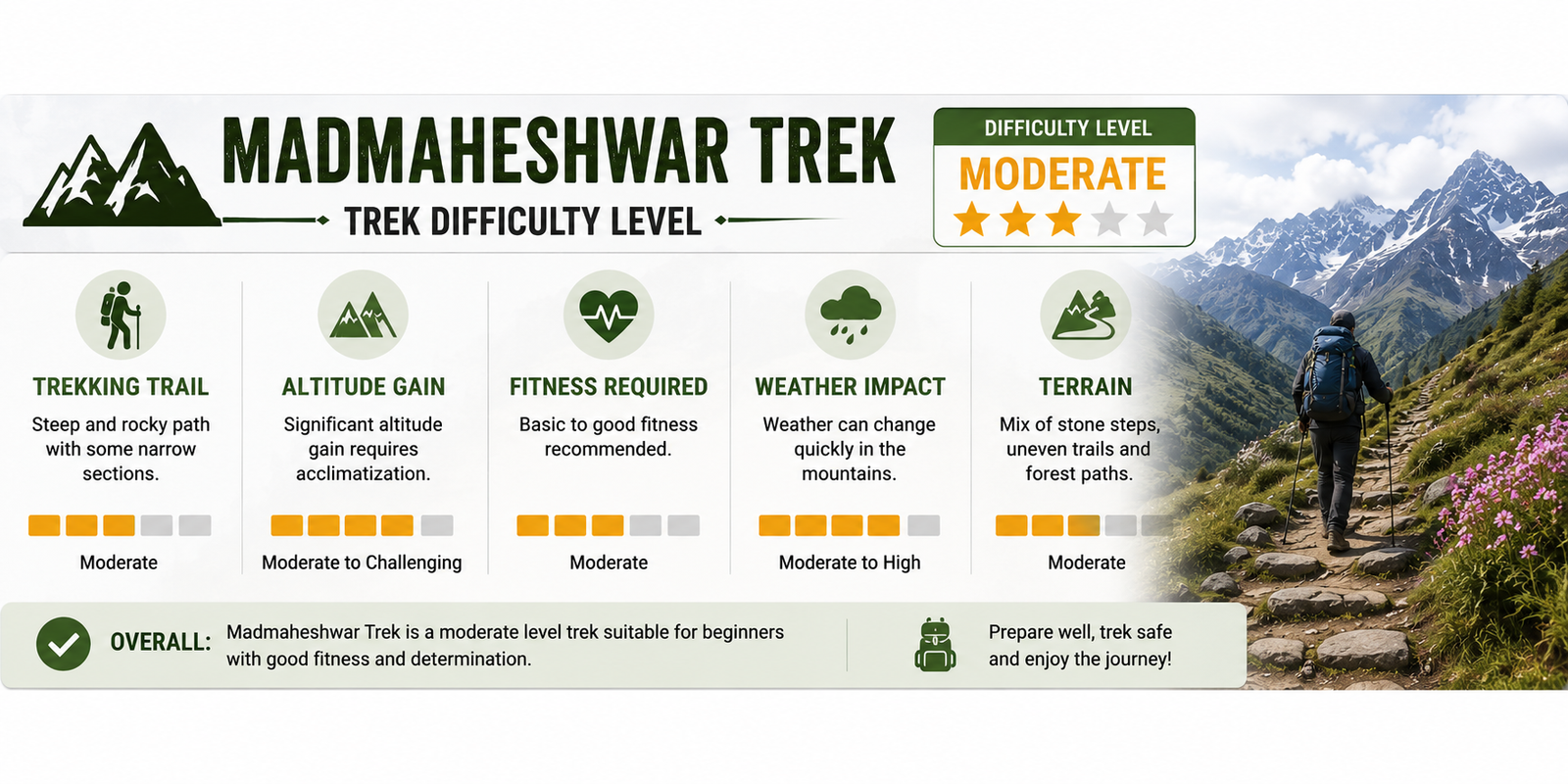
Madmaheshwar is rated a moderate trek — it needs no technical climbing gear or prior mountaineering experience, but the sustained climb on Day 2 and the overall altitude gain make it unsuitable for someone with zero walking fitness.
| Factor | What to Expect |
|---|---|
| Terrain | Forest trail, stone steps, a few steep switchbacks |
| Altitude Gain | Ransi (1,800 m) to Madmaheshwar (3,497 m) |
| Toughest Stretch | Gaundhar to Buda Madmaheshwar |
| Fitness Needed | Comfortable walking 10–12 km on hilly terrain |
| Suitable For | Beginners with basic fitness prep; families with older children |
Spend three to four weeks before the trek building stamina with brisk walking, stair climbing, or light jogging, and break in your trekking shoes well ahead of time — blisters on Day 1 make the rest of the trek harder than it needs to be.
5. Best Time to Visit
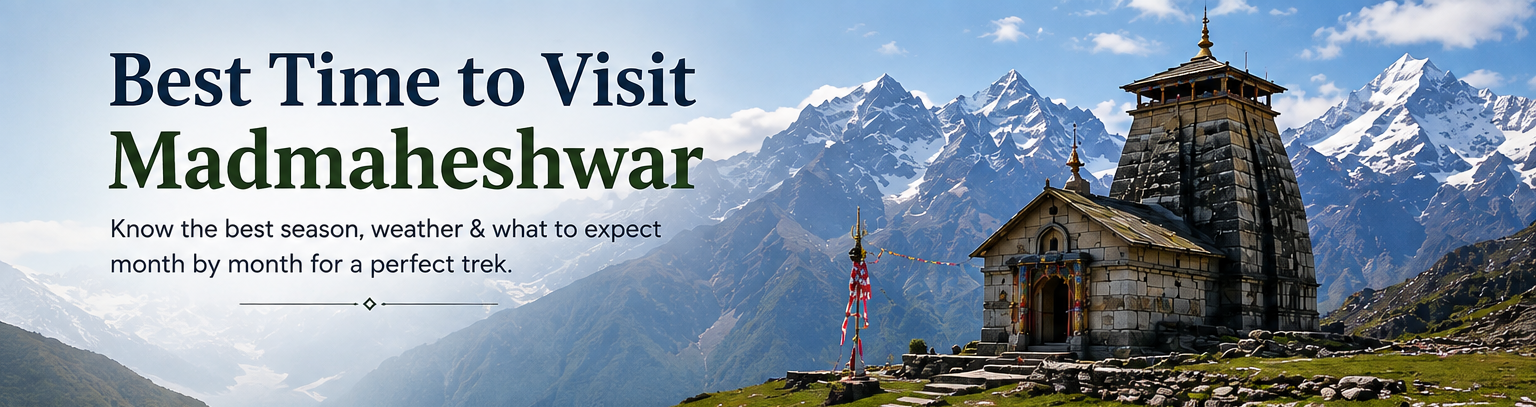
The Madmaheshwar trek is open only for part of the year, and timing your visit well makes a real difference to how the trail feels underfoot.
| Season | Months | Conditions |
|---|---|---|
| Pre-Monsoon | May – mid-June | Clear skies, blooming rhododendrons, moderate crowds |
| Monsoon | Mid-June – Aug | Avoid – heavy rain, leeches, landslide risk |
| Post-Monsoon | Sept – Oct | Best visibility, crisp air, fewer trekkers |
| Late Season | Nov | Cold, temple closing for winter – experienced trekkers only |
May to mid-June and September to October are the two windows most guides recommend. Monsoon months
should be avoided entirely — the trail turns slippery, streams swell, and landslides are
common
on the Ukhimath–Ransi road. itself, sometimes before you even reach the trailhead.
For a detailed seasonal breakdown, see our Best Time to Visit Madmaheshwar guide.
6. Permits, Registration & Practical Information
Because the trail runs through the Kedarnath Wildlife Sanctuary, every trekker must register at the forest check post in Ransi before starting the climb.
- Carry a valid government photo ID (Aadhaar card, passport, or driving licence) for registration.
- Registration includes a nominal forest entry fee collected on the spot — this is subject to change, so confirm the current amount at the check post.
- Hiring a local guide or porter through Ransi or Ukhimath is recommended, especially for first-timers, and it also supports the local economy.
- Withdraw cash before leaving Ukhimath — there is no ATM at Ransi or anywhere along the trail.
- Mobile network becomes unreliable past Ukhimath and disappears for most of the trek — let someone know your itinerary before setting off.
- Single-use plastic bottles are not allowed inside the sanctuary — carry a refillable bottle instead.
7. Things to Carry
Pack light, but pack right — most of what you need for Madmaheshwar fits into one 40–50 litre backpack. Layering matters more than heavy gear here, since mornings above Gaundhar can be near freezing even in June, while midday sun on the open meadows gets surprisingly warm. For a complete checklist, see our Madmaheshwar Trek Packing List.
Shoes
Clothes
Poncho
Bottle
Medicines
8. Altitude & Acclimatization Tips
Madmaheshwar sits close to 3,500 meters, and while most trekkers complete the route without serious trouble, gaining that much height in two to three days deserves a bit of respect.
- Walk at a steady, unhurried pace — reaching camp an hour later is always better than pushing hard and feeling unwell that evening.
- Drink water regularly through the day rather than in large amounts at once.
- Watch for early signs of altitude sickness — headache, nausea, unusual breathlessness — and rest or descend if they don’t ease.
- Skip alcohol during the trek — combined with altitude, it makes acclimatization harder and judgment worse.
- Eat enough — appetite often drops at height, but your body still needs the fuel for the climb.
9. Tips for First-Time Trekkers
- Start your trek early in the morning.
- Carry enough water and energy snacks.
- Respect the local culture and environment.
- Avoid plastic and keep the trail clean.
- Check the weather forecast before you start.
- Book your stay in Ransi or Gaundhar in advance during peak season (late May–June, Sept–Oct).
- Trek with a registered local guide on your first attempt — the route is well-marked but remote.
Madmaheshwar is not just a trek, it’s a walk through one of Uttarakhand’s last quiet Himalayan trails. Pace yourself, respect the mountain, and the sunrise at Buda Madmaheshwar will make every step worth it.
Frequently Asked Questions
Find answers to the most common questions about the Madmaheshwar Trek, route, difficulty, best time to visit, and trekking essentials.
1. How difficult is the Madmaheshwar Trek?
The Madmaheshwar Trek is generally considered a moderate-level Himalayan trek. Some sections of the trail can be steep and physically demanding, especially while approaching Madmaheshwar Temple. First-time trekkers should maintain a comfortable pace, take regular breaks, stay hydrated, and avoid rushing on the uphill sections.
2. What is the best time to visit Madmaheshwar for trekking?
The best time for the Madmaheshwar Trek is generally during the summer months from May to June and the post-monsoon season from September to October. During these periods, the weather is comparatively suitable for trekking and the Himalayan landscapes are beautiful. Monsoon months can bring heavy rainfall and slippery trails, while winter can bring snow and very cold conditions.
3. How long does the Madmaheshwar Trek take?
The trekking section of the Madmaheshwar journey generally takes around two days, depending on the itinerary, weather conditions, and walking pace. Trekkers usually begin the trail from the designated roadhead and stay overnight near the route before continuing towards Madmaheshwar Temple. The complete trip takes additional days for road travel and rest.
4. What should I pack for the Madmaheshwar Trek?
For the Madmaheshwar Trek, carry comfortable trekking shoes, warm clothes, a waterproof jacket, rain protection, a small backpack, water bottle, sunglasses, sunscreen, personal medicines, basic toiletries, a flashlight, and necessary identification documents. It is better to pack light because carrying unnecessary weight can make the trek more tiring.
5. Is accommodation available during the Madmaheshwar Trek?
Yes, basic accommodation options are available along the Madmaheshwar Trek route, depending on the season and local availability. Trekkers can find simple guesthouses, homestays, and local accommodation options. Facilities are generally basic in the high-altitude areas, so travellers should be prepared for a simple mountain stay rather than luxury accommodation.