Madmaheshwar Weather Update & Trek Route: Current Conditions and Safety Guide
Planning the Madmaheshwar Trek during the Himalayan monsoon requires more than checking a normal weather app. Rainfall can affect the road to Ransi, forest sections of the walking trail, river crossings and temporary infrastructure along the route. Conditions can also change quickly between Ukhimath, Ransi, Gaundhar, Bantoli and the higher reaches around Madmaheshwar Temple.
This Madmaheshwar weather update and trek route guide was reviewed on August 25, 2026. It combines the latest publicly reported yatra status with practical route information and official Uttarakhand Tourism references.
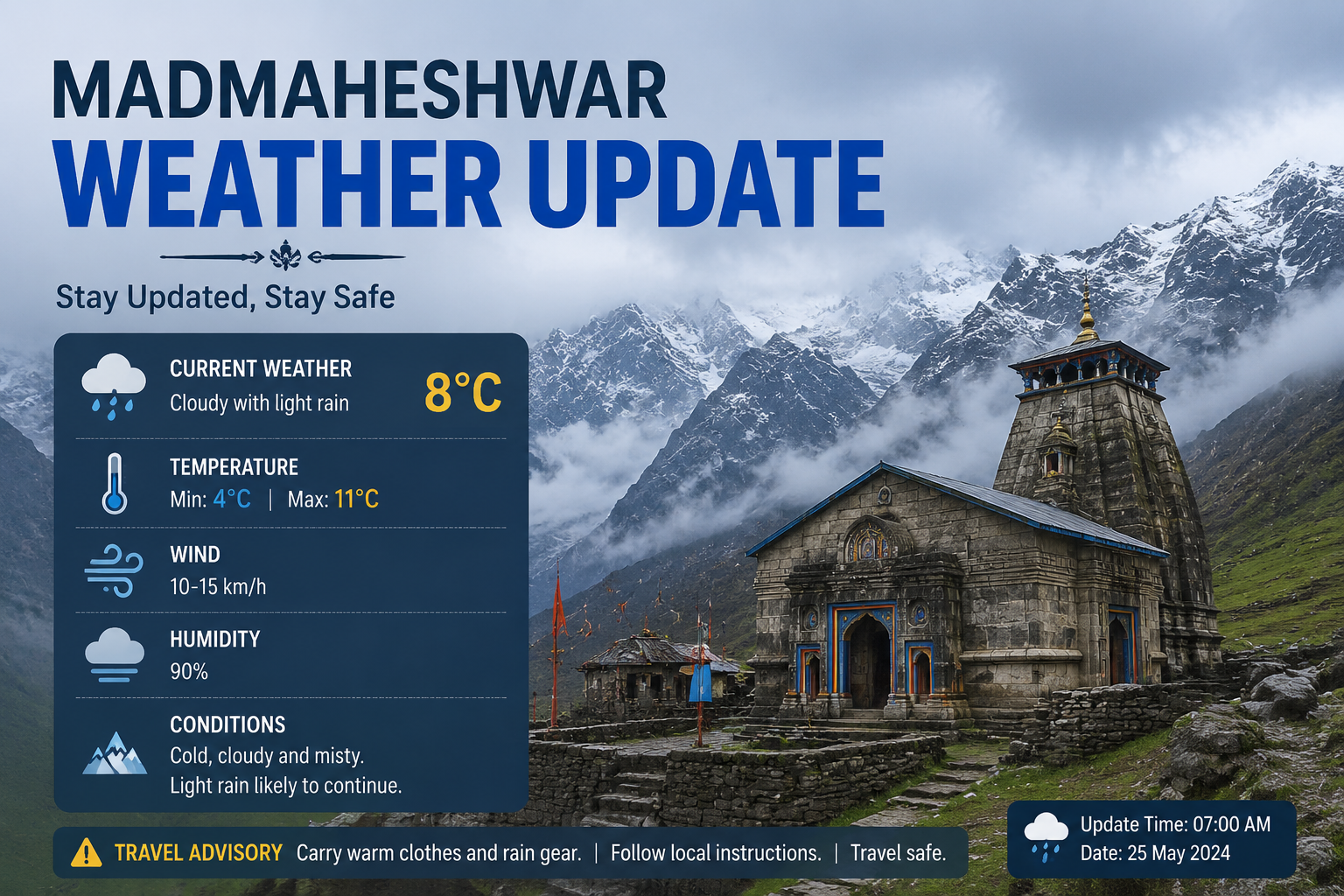
Madmaheshwar Trek Status at a Glance
| Last Reviewed | August 25, 2026 |
| Latest Yatra Status | Yatra resumed on August 19, 2026 after a temporary suspension |
| Main Trek Base | Ransi Village |
| Main Route | Ransi → Gaundhar → Bantoli area → Madmaheshwar |
| August Conditions | Monsoon rain, slippery trails and possible road or trail interruptions |
| Better Trek Window | September–October after monsoon conditions stabilise |
This status is a dated travel update, not a guarantee that the trail will remain open every day. In Himalayan terrain, a few hours of intense rain can affect roads, bridges or walking sections. Always check local administration and weather advisories again before leaving Ukhimath or Ransi.
1. Current Madmaheshwar Yatra Update – August 2026
The most important update for anyone planning the trek right now is that the Madmaheshwar Yatra was temporarily suspended on August 7, 2026 because of unsafe trail conditions, adverse weather and problems around a damaged pedestrian bridge and trolley crossing. After inspections by the relevant departments, the pilgrimage was allowed to resume from August 19.
The resumed movement does not mean monsoon risk has disappeared. Police, SDRF, DDRF and other personnel were deployed around sensitive sections, and movement at the trolley crossing was organised into controlled time windows. Travellers should therefore treat this as a managed monsoon route rather than normal dry-season trekking conditions.
The latest publicly reported trolley operating windows following the reopening were 6:30 AM–9:00 AM, 10:30 AM–1:00 PM and 2:30 PM–6:00 PM. These timings may be revised if weather or local conditions change, so they should be reconfirmed on the day of travel.
2. What Is the Current Madmaheshwar Trek Route?
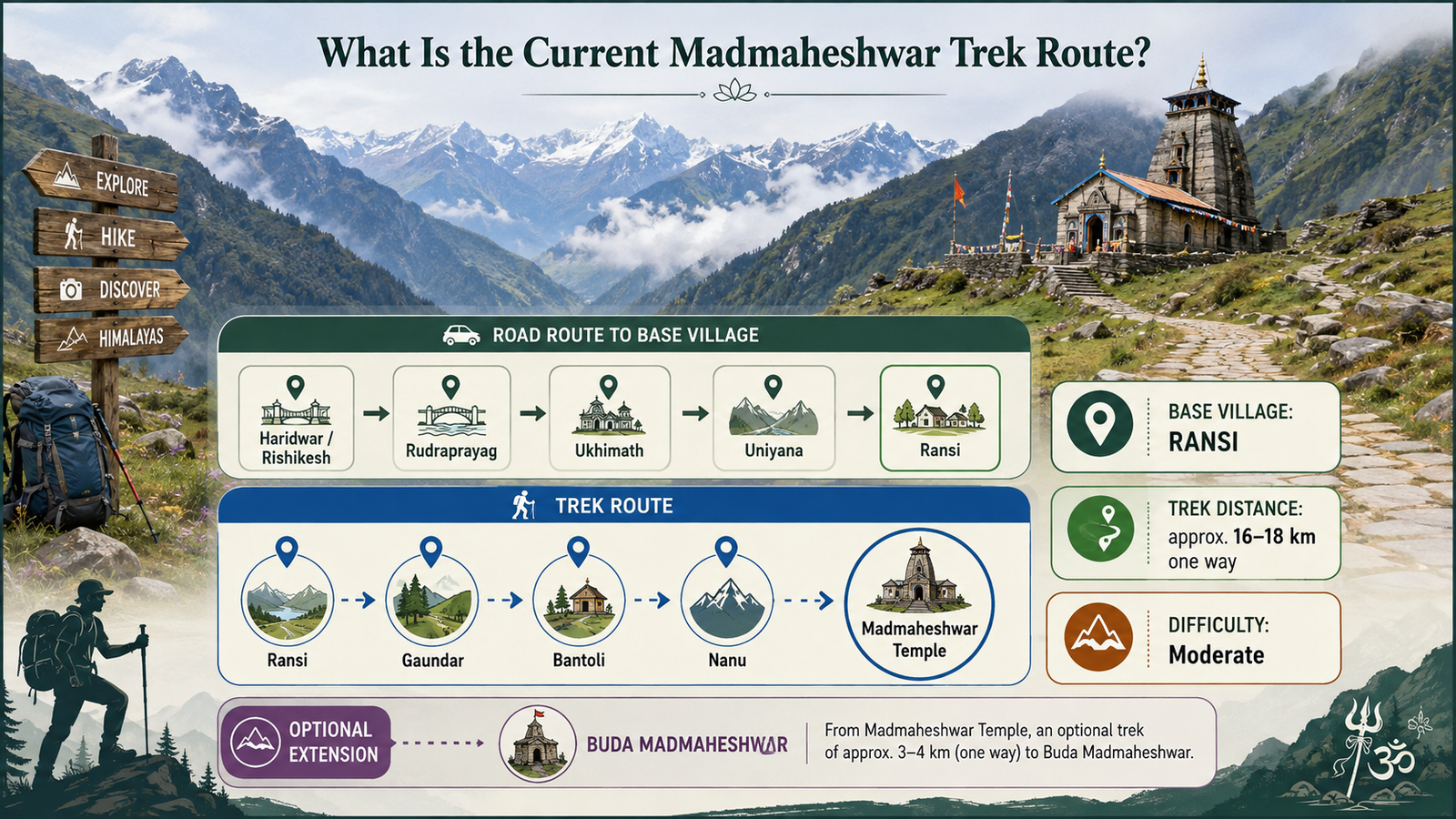
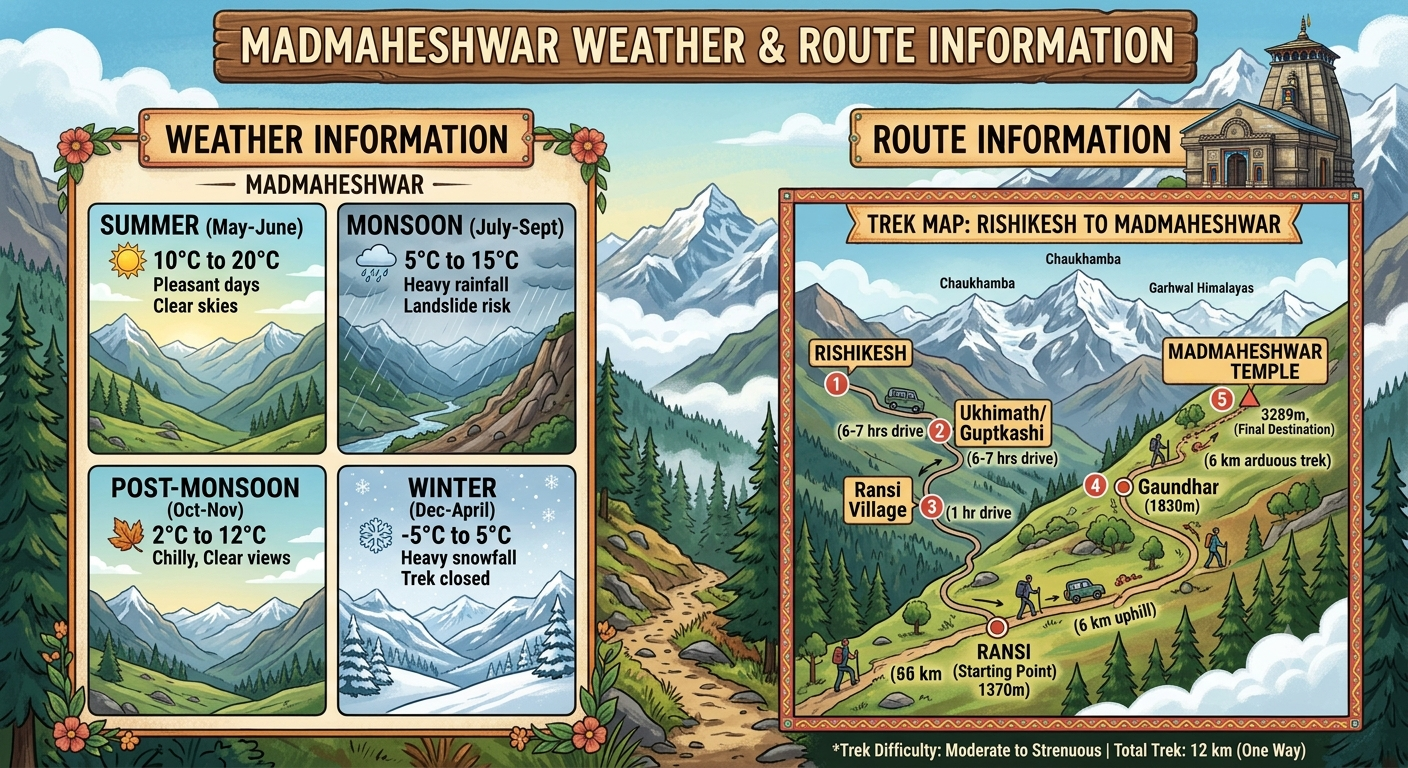
Ransi is widely used as the practical road-accessible base for the Madmaheshwar trek. Travellers normally approach Ransi through the Ukhimath region and then continue on foot through settlements and trail sections around Gaundhar and Bantoli before climbing towards Madmaheshwar.
A useful way to understand the journey is: Rishikesh/Haridwar → Rudraprayag → Ukhimath → Ransi → Gaundhar → Bantoli → Madmaheshwar Temple. The road section ends before the main mountain pilgrimage, so you should plan the trip as a combination of a long hill drive followed by a proper Himalayan trek.
Official tourism references do not always quote exactly the same trekking distance. Uttarakhand Tourism's destination page describes a 24-kilometre trek, while its Panch Kedar circuit information describes the traditional approach from Uniana and Ransi as a total 19-kilometre trek. Road development, route definition and the point from which distance is measured can explain why different figures appear online.
For that reason, avoid planning food, daylight or walking time around a single kilometre figure. Confirm the current roadhead and overnight stop with a local operator, accommodation provider or administration contact before you start.
3. Madmaheshwar Weather in August: What Trekkers Should Expect
August falls within the southwest monsoon period in Uttarakhand. At lower and middle elevations, rain can be heavy or persistent, while cloud can build quickly around the higher valley. The main problem is not simply getting wet. Rain affects grip, visibility, river levels, slope stability and road reliability at the same time.
Forested sections can become muddy and slippery. Loose stones are harder to identify beneath wet ground, and leeches may be encountered in damp vegetation. Cloud cover can also reduce the panoramic mountain views that many travellers associate with Madmaheshwar and Budha Madmaheshwar.
If your dates are flexible, September and October are normally more practical than peak monsoon. For a complete season comparison, read our Best Time to Visit Madmaheshwar guide before finalising your dates.
4. How Rain Changes the Ransi–Madmaheshwar Trail
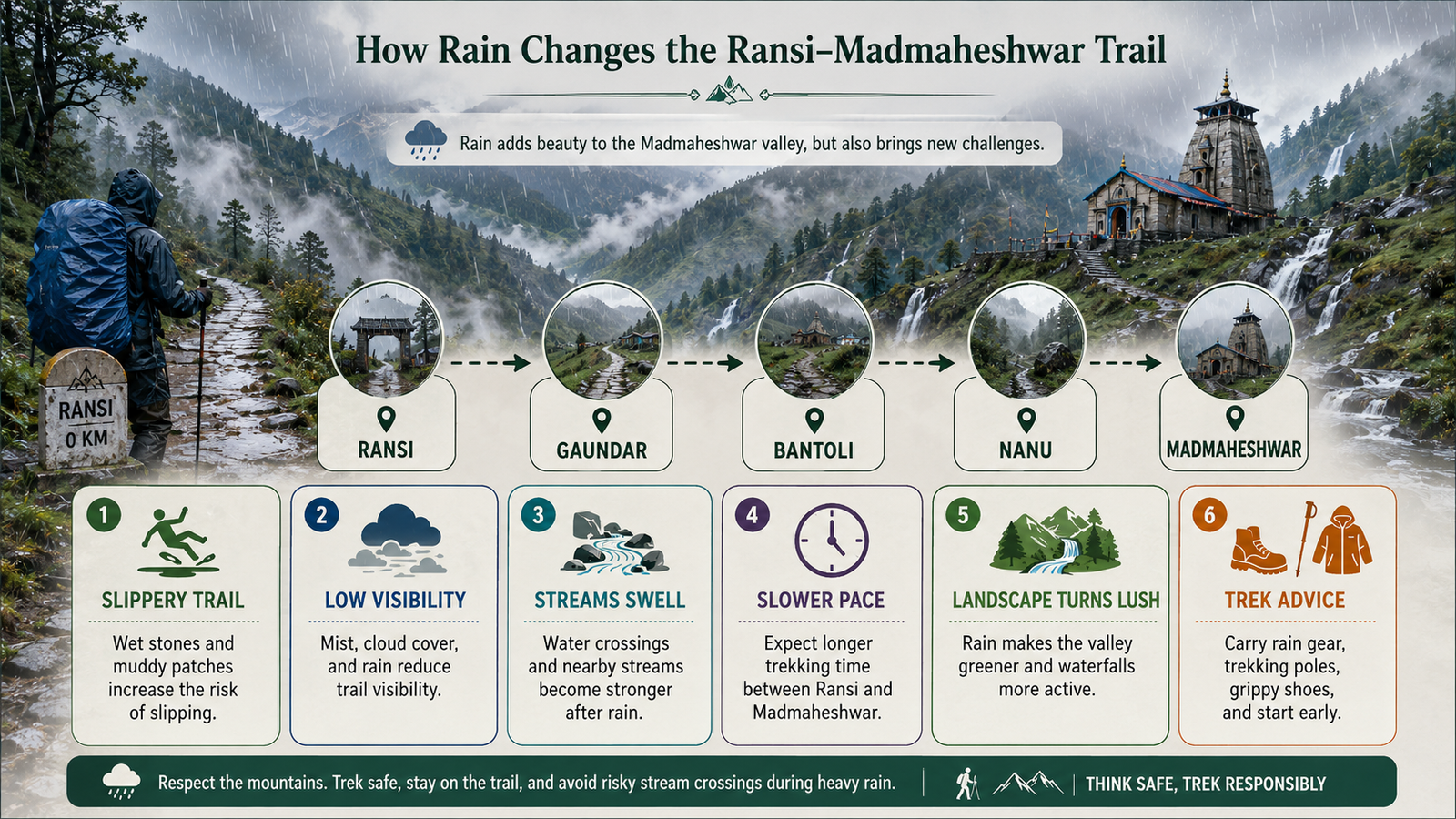
Weather has a different impact on each part of the journey. The road towards Ukhimath and Ransi can face temporary interruptions from debris, landslides or slope movement after heavy rainfall. Even when the road remains technically open, journey times may increase significantly.
Once the trek begins, wet forest paths demand slower walking. Near streams and river crossings, water levels can change after rainfall further upstream. Exposed or steep sections also require more attention because a route that feels straightforward in dry weather can become considerably more demanding when the surface is wet.
This is why the most useful "weather update" is not simply a temperature forecast. Before starting, check rainfall, district alerts, road conditions and local information about the pedestrian route. A clear morning forecast does not automatically mean every section of the trail has recovered from rain the previous day.
5. Should You Trek Madmaheshwar Right Now?
The answer depends on your experience, flexibility and the latest local conditions. The fact that the yatra has reopened means movement has been permitted under specific safety arrangements, but August remains a monsoon month. First-time Himalayan trekkers should be especially cautious about treating an official reopening as proof of ideal trekking weather.
If you are already in Uttarakhand and conditions are stable, travel only after confirming the route locally. Start early, maintain a conservative pace and be prepared to stop or return if authorities advise against continuing. Do not attempt to "beat" a weather warning simply because accommodation has already been booked.
Travellers with flexible dates may get a more predictable experience by postponing the trek until after the strongest monsoon activity. September can bring greener landscapes with improving visibility, while October generally offers cooler weather and excellent Himalayan views before winter conditions begin approaching.
6. What to Carry for the Madmaheshwar Trek in Wet Weather
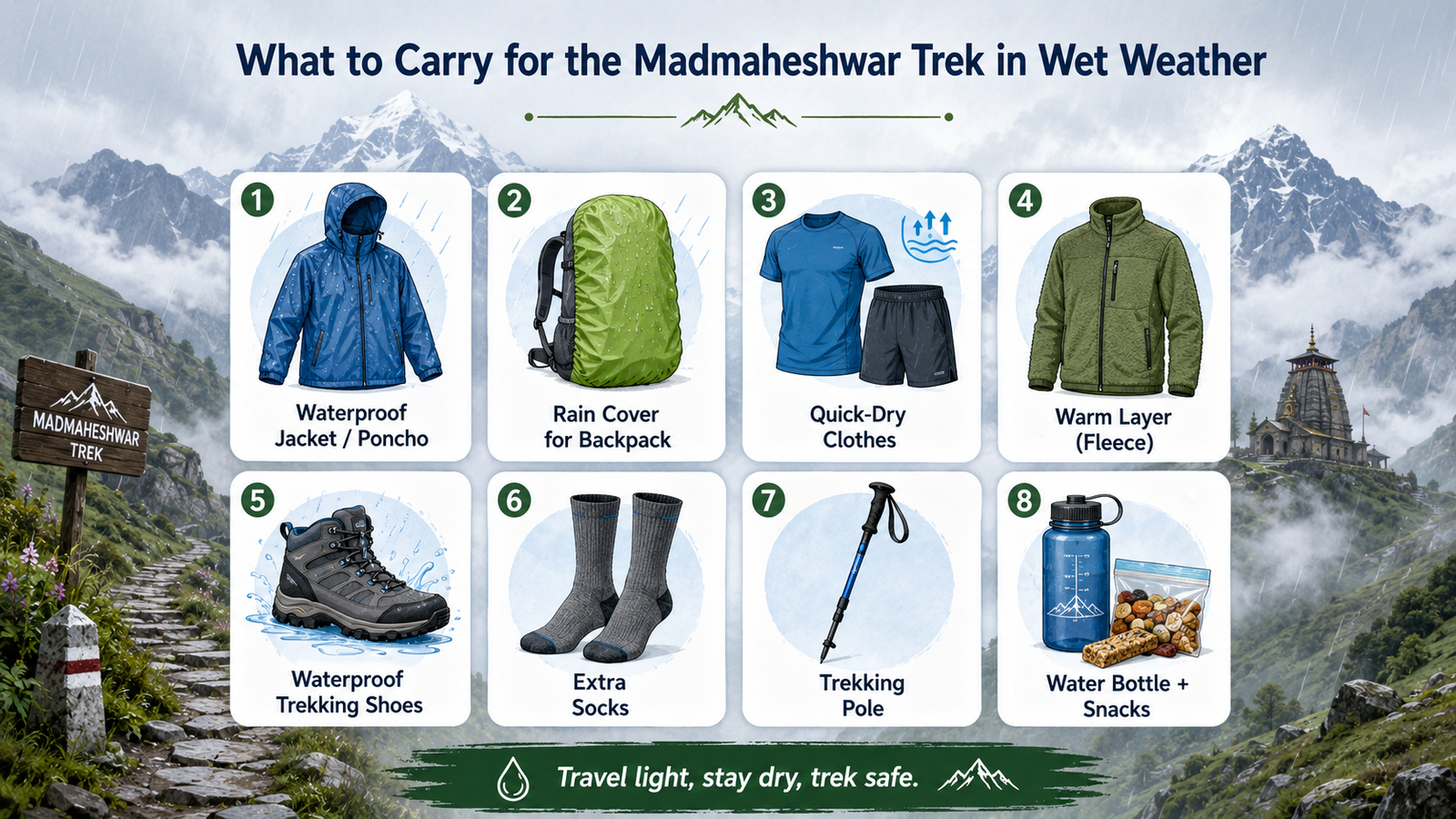
A normal day-hike setup is not enough for a multi-stage Himalayan route during wet weather. Waterproof protection should cover both you and your essential gear. Carry a reliable rain jacket or poncho, a backpack rain cover and waterproof pouches for documents, phone, money and spare clothing.
Trekking shoes should have strong grip and should already be broken in. Carry warm layers even if the lower valleys feel humid, because temperatures fall as you gain elevation and wet clothing increases heat loss. A basic first-aid kit, personal medicines, water, energy snacks, torch or headlamp and power bank should also be part of your pack.
Do not overload your backpack. Extra weight makes steep and slippery sections more tiring and can affect balance. For a detailed equipment breakdown, use our Madmaheshwar Trek Packing List .
7. Safety Checks Before Leaving Ukhimath or Ransi
Treat Ukhimath and Ransi as decision points rather than simply transit stops. Before moving deeper into the route, ask whether the trail is currently open, whether any crossing arrangement has changed, whether rain is expected upstream and whether authorities have issued timing restrictions.
Download offline maps before entering weak-network areas and share your planned route with someone who is not travelling with you. Carry sufficient cash because ATM and digital payment reliability decreases as you move farther from larger towns. Begin walking early enough to avoid being forced into difficult sections after dark.
If you are unfamiliar with mountain trails or travelling alone during unstable weather, consider using a local guide. A guide cannot remove the weather risk, but local knowledge can help you understand changing trail conditions, suitable stopping points and whether continuing is sensible.
8. Madmaheshwar Trek Route After the Monsoon
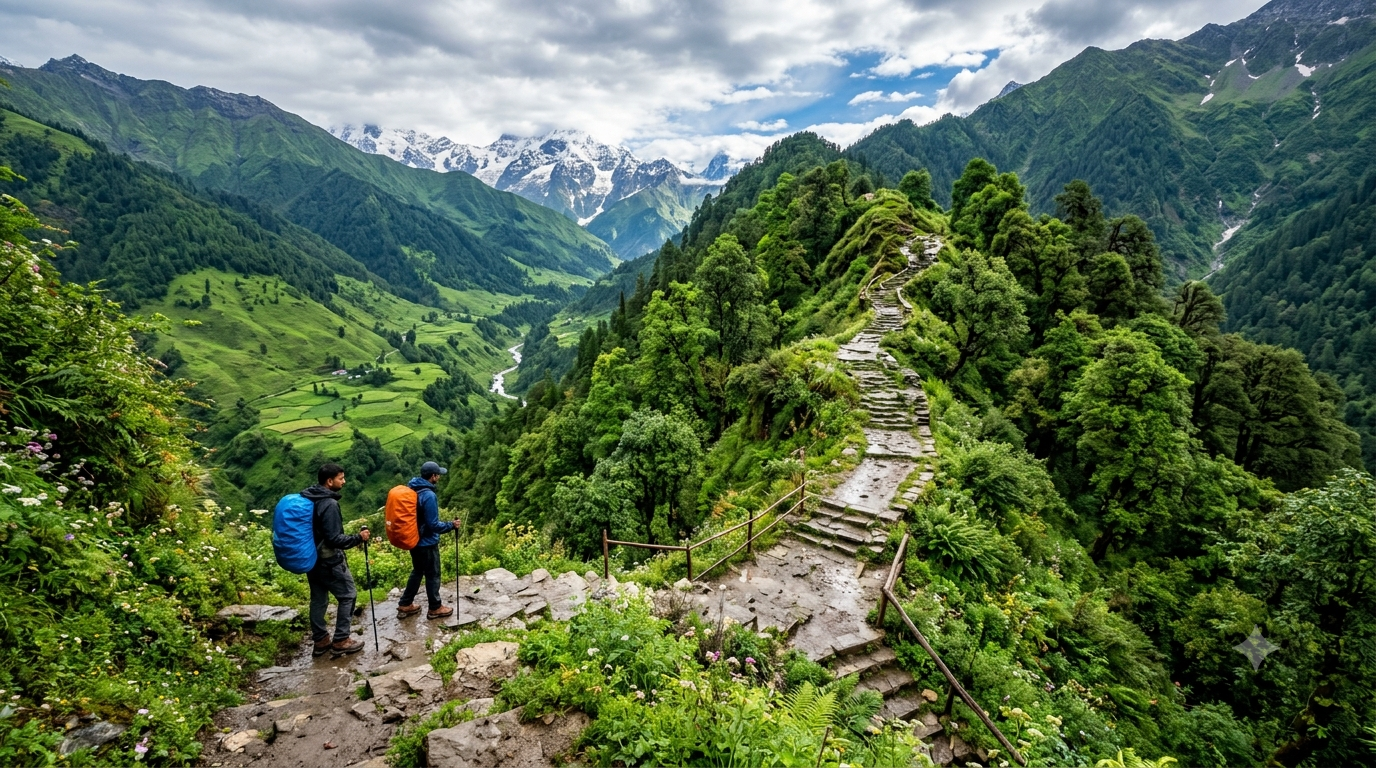
The post-monsoon period changes the character of the trail. As sustained rainfall decreases, paths gradually become firmer, visibility improves and the washed Himalayan landscape remains intensely green. September and October are therefore popular with trekkers who want to balance scenery, accessibility and more dependable trail conditions.
October nights can become substantially colder, particularly around the temple, so the packing strategy changes even though rain risk usually decreases. The temple also eventually closes for winter, meaning anyone travelling late in the season must verify the year's official closing date.
If you prefer a planned itinerary instead of arranging each stage independently, compare the available Madmaheshwar trek packages after checking the weather window that suits you.
9. How We Verify Madmaheshwar Weather and Route Information
Route information on Madmaheshwar should be treated carefully because old blog posts can remain visible long after roads, bridges or local arrangements have changed. This guide separates permanent route information from dated travel updates. Core route details are cross-checked against Uttarakhand Tourism information, while time-sensitive August 2026 status information is based on reports citing the Rudraprayag district administration and emergency services.
Uttarakhand Tourism identifies Ransi as a base for the trek and describes Madmaheshwar as a high-altitude trekking destination in the Garhwal region. Its different pages also demonstrate why kilometre figures should always be read together with the stated starting point.
For current government destination information, travellers can also consult Uttarakhand Tourism's Madhyamaheshwar information . Weather, trail and administration updates should be checked again immediately before departure.
10. Final Planning Advice for the Madmaheshwar Trek
Madmaheshwar combines pilgrimage, remote Himalayan trekking and rapidly changing mountain conditions. During August, the most important planning factor is flexibility. Keep buffer time, avoid fixed assumptions about road or trolley availability and be willing to change your itinerary if rainfall makes the route unsafe.
If the weather is stable and local authorities permit movement, follow the current route arrangements and start early. If heavy rain, landslide warnings or route restrictions are reported, postponing the trek is the safer decision. The temple and mountains will still be there when conditions improve.
Once you have confirmed the weather and route status, read the complete Madmaheshwar Trek Route, Distance & Difficulty Guide to build your itinerary, and explore the history and mythology of Madmaheshwar Temple to understand the pilgrimage significance of the second Kedar.
Frequently Asked Questions
Common questions about Madmaheshwar weather and the current trek route.
1. Is the Madmaheshwar trek currently open in August 2026?
The latest verified public update reviewed for this article states that the Madmaheshwar Yatra resumed on August 19, 2026 after a temporary suspension. Conditions can change quickly during monsoon, so verify the latest district and weather advisory before starting.
2. What is the Madmaheshwar trek route?
Ransi is commonly used as the trek base. The walking route then moves through the Gaundhar and Bantoli area before climbing towards Madmaheshwar Temple. Travellers generally reach Ransi via Rudraprayag and Ukhimath.
3. How long is the Madmaheshwar trek?
Trek distance varies according to the starting point and route measurement. Uttarakhand Tourism references a 24-kilometre trek on its destination page and a 19-kilometre traditional approach on its Panch Kedar information. Confirm the current roadhead before calculating your walking distance.
4. Is August a good month for Madmaheshwar?
August is a monsoon month and is not generally the most reliable time for trekking. Heavy rain can make paths muddy and slippery and can affect mountain roads, river crossings and visibility. September and October usually offer more stable conditions.
5. What should I check before leaving for Madmaheshwar?
Check the latest rainfall forecast, road status to Ransi, local administration advisories, trail condition and any crossing or trolley restrictions. Reconfirm these details locally before starting the trek.
6. What should I carry for Madmaheshwar during monsoon?
Carry waterproof clothing, a rain cover, trekking shoes with strong grip, warm layers, personal medicines, basic first aid, water, energy snacks, a torch, power bank and waterproof protection for documents and electronics.